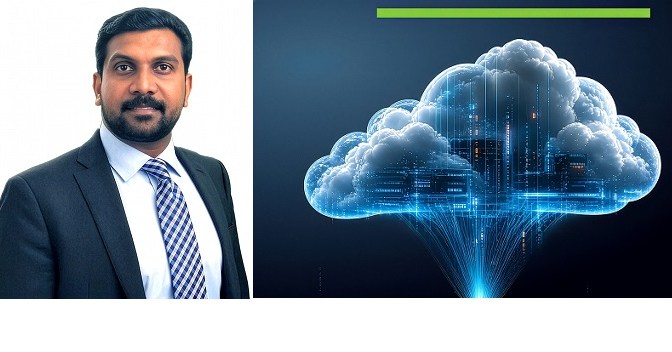
SEED Group Partner, KniTT, Launches Private Cloud Platform to Shore up Data Sovereignty from Geopolitical Risks
Launch of Elysium comes in the context of Middle East spend on sovereign data cloud set to triple as public cloud hyperscalers face heightened security threats
Dubai, July29, 2026: One of the partners of the SEED Group under the aegis of The Private Office of Sheikh Saeed bin Ahmed Al Maktoum, KniTT, today announced the launch of Elysium, an AI-powered private cloud platform in the context of Increasing risks to data sovereignty and kinetic attacks on public cloud hyperscale data centres in the region.
In a statement, KniTT said its foray into the Middle East with Elysiumfrom the SEED springboard in the UAE also comes at a time when geopolitical challenges are tailwinding shift to private and hybrid data clouds.
“With focus on securing data control on the rise, enterprises are now facing new set of challenges, including unpredictable cloud costs, increasing cybersecurity exposure, vendor lock-in, and limited grip over data residency. What was once a straightforward shift to the cloud is now a more complex strategic decision. At the same time, global geopolitical dynamics are reinforcing a hard truth – when your data sits on infrastructure you don’t control, your sovereignty is negotiable, said Praveen Raveendran, Founder & CEO of KniTT.
According to Gartner, 20 per cent of the cloud workloads are being geopatriated globally to bring digital data and computing power back under local or national control, as per Gartner.
According to KniTT, migrating data residency within geographical boundaries is now perceived as a global imperative, particularly in conflict-prone regions where public cloud hyperscalers fall in the kill chain. The shift is anchored in the region by the UAE and Saudi Arabia, with cumulative current sovereign cloud projects estimated to be upwards US$6 billion, estimated to unlock north of US$200 billion in economic value in the medium to long-term.
“The cloud journey started with speed and scale, but it overlooked control. Today, enterprises are realising that control is not optional. With Elysium, we are giving organisations the ability to innovate at cloud scale while retaining ownership of their data, infrastructure and destiny.” addedPraveen Raveendran.
Rising share of digital economy in GDP
The sovereign cloud projects will also catalyse the contribution of the digital economy to GDP in these countries., supporting the surge in the non-oil economies of both the countries. Digital economy accounts for 15.6 per cent of Saudi Arabia’s GDP as of 2025 with the ICT sector alone contributing upwards of US$63 billion. The digital economy share in UAE’s GDP is approximately 12 per cent and the 2031 target is to reach 19.4 per cent by 2031worth a value of US$140 billion.
Elysium: Reimagining cloud for a sovereign-first world
Unlike traditional cloud models that require organizations to move data into third-party infrastructure, Elysium brings cloud capabilities directly to where data already resides. This approach enables enterprises to maintain sovereignty, reduce latency, improve security posture, and retain control over critical workloads while still benefiting from cloud operating models and automation.
“Elysium is not just an alternative – it’s an evolution. The next generation of cloud will not be defined by where the infrastructure sits. It will be defined by who controls it. Elysium allows organizations to retain ownership of their data, security posture, and operating environment while still delivering the automation, elasticity, and developer experience enterprises expect from modern cloud platforms,” said Alan Adams, SVP – Products and Platforms at KniTT.
He said Elysium also comes in at a time when there is concern over systemic risk in the increasing concentration of enterprise workloads within a small number of global hyperscale providers. This is the reason why many organizations are now exploring hybrid and sovereign cloud strategies to diversify data storage infrastructure that supports improved resilience with control.
The platform combines hyperscale performance with dedicated infrastructure, built on a Zero-Trust security architecture that ensures full data sovereignty with seamless interoperability with public cloud ecosystems, offering a minimum of 30 per cent total cost of ownership and upwards.
Ends
 UAE News 24/7