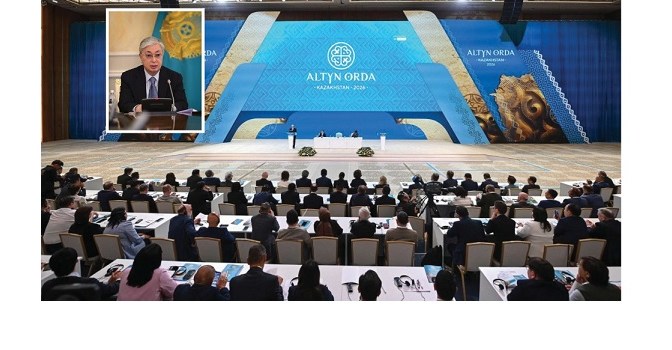
800 Years Since the Founding of the Golden Horde State
Astana – Today (Tuesday), the activities of the international conference titled “The Golden Horde: The Heritage of the Steppe Civilization as Exemplified by the Golden Horde: History, Archaeology, Culture, Identity” commenced at the Palace of Independence in the Kazakh capital, Astana. The event celebrates the 800th anniversary of the founding of the Golden Horde state. The two-day conference is held under the auspices of UNESCO, with the participation of Kazakh President Kassym-Jomart Tokayev, who initiated the conference idea in 2019, alongside a large number of local and foreign scientists and experts, and representatives of the international scientific community.
The conference aims to solidify Kazakhstan’s status as a leading international center for studying the heritage of the Golden Horde, and to highlight its scientific capabilities in Central Asian and Eurasian civilizations. This is achieved through a comprehensive and integrated analysis of the political, economic, cultural, and spiritual heritage of the “Ulus of Jochi” civilization, and its role in shaping civilizational processes in the Central Eurasian region.
The conference brought together more than 300 scientists and experts, including 120 foreign researchers from over 20 countries. Participants included historians specializing in the Middle Ages, archaeologists, orientalists, Turkologists, Mongolists, numismatists, epigraphists, political scientists, cultural scholars, art historians, diplomats, and representatives of international organizations.
The Astana Declaration
During the conference proceedings, participants reaffirmed the adoption of the Astana Declaration as a pivotal role for Kazakhstan as one of the main international centers for studying and disseminating the heritage of the “Ulus of Jochi.” They emphasized the need to enhance scientific, educational, cultural, and humanitarian cooperation in this field, noting that the heritage of the Golden Horde is an integral part of the historical and cultural development of the peoples of Eurasia, and an important element in the national identity of Kazakhstan.
Participants also expressed their readiness to work together to safeguard the tangible and intangible heritage of the Golden Horde, expand the scope of archaeological research and excavation programs, develop educational initiatives, and implement international humanitarian projects.
The Astana Declaration will become a programmatic document aimed at developing international cooperation, preserving historical memory, promoting intercultural dialogue, and disseminating the shared heritage of the peoples of Central Eurasia.
The general session was moderated by Sayasat Nurbek, Minister of Science and Higher Education of the Republic of Kazakhstan, in the presence of representatives from the UNESCO Secretariat, diplomatic missions of member states of the Commonwealth of Independent States (CIS), the Shanghai Cooperation Organisation (SCO), the Collective Security Treaty Organization (CSTO), and the Conference on Interaction and Confidence-Building Measures in Asia (CICA). Attendees also included ambassadors from Russia, China, Turkey, Iran, Mongolia, Ukraine, Hungary, Bulgaria, the United States of America, Great Britain, Germany, France, and several other countries.
Cultural and Heritage Exhibition
On the sidelines of the conference, a comprehensive exhibition was organized to disseminate the historical and cultural heritage of the Golden Horde and expand the scope of scientific interest in its study. The exhibition shed light on the heritage of the Golden Horde as a model civilization, featuring archaeological artifacts, manuscripts, and cultural relics. It covered key themes including: State and Power; Costumes and Clothing of the Steppe; Military Attire; Interaction Between Steppe Civilizations and Urban Civilizations; Culture and Arts. This was in addition to special focus given to the interactive map, which includes 70 archaeological and architectural sites, 17 of which are displayed with detailed descriptions, aerial photographs, and 3D renderings.
Among the key exhibits, the manuscript “Ansab Khanov” (Genealogies of the Khans) held a special place, as it contained relative information about rulers and historical figures of that era. The exhibition also featured the Atlas of Catalonia, a genealogical tree of the Khans, coins, written sources, daily tools, as well as written heritage consisting of three decrees, four diplomatic letters, and twenty-one manuscripts displayed in their original form, exact copies, and electronic versions.
The exhibition relies on materials from important archaeological sites in Kazakhstan, including the cities of Saraichik, Sygnak, and Barshynkent, among other sites of historical significance in the country.
The cultural program of the symposium included a musical concert titled “The Heritage of the Great Steppe,” reflecting the richness of the historical and cultural heritage of the Great Steppe and the continuity of spiritual traditions in the Eurasian space.
Sayasat Nurbek, Minister of Science and Higher Education of Kazakhstan, emphasized during his speech at the general session that the conference is of strategic importance for the development of historical sciences and the re-examination of historical past. He stated:
“Today we are not only discussing the past, but also the foundations for understanding the state, identity, and Kazakhstan’s position in the history of Eurasia. In light of the contemporary reinterpretation of history, the Golden Horde gains special importance as the most crucial stage in shaping the political, cultural, and spiritual traditions of the Great Steppe.”
A Model for Eurasian Integration
He added: “The Golden Horde represented a unique model for Eurasian integration, ensuring interaction between East and West, and the exchange of ideas, technologies, and cultural practices. Its history reflects the confluence of steppe civilizations and settled civilizations.” He further stated: “For Kazakhstan, the study of the Golden Horde is not limited to the academic aspect alone, but is rather a matter related to historical legitimacy. Kazakhstan considers itself the successor and heir to the ‘Ulus of Jochi’, where the foundations of the state and ethnic composition were laid, which later continued into the Khanates of Kazakhstan.”
Welcoming remarks were also delivered by the Deputy Director-General ad interim of UNESCO for Culture; the Director of the UNESCO World Heritage Centre, Lazare Eloundou Assomo; the Minister of State of the Kyrgyz Republic, Arslan Koichiev; the Minister of Culture of the Republic of Tatarstan, Irada Ayupova; the President of the “France Unie” Foundation, Audrey Azoulay; the President of the Mongolian Academy of Sciences, Regdel Duger; and the President of the Academy of Sciences of the Republic of Uzbekistan, Shukrat Ayupov. Welcoming remarks were also delivered by all representatives of the Golden Horde Research Center and the Khans of the Tatars, which bears the name of M.A. Usmanov, the Institute of History named after Sh. Marjani of the Academy of Sciences of the Republic of Tatarstan, and Ilnur Mirgaliev.
The Golden Horde
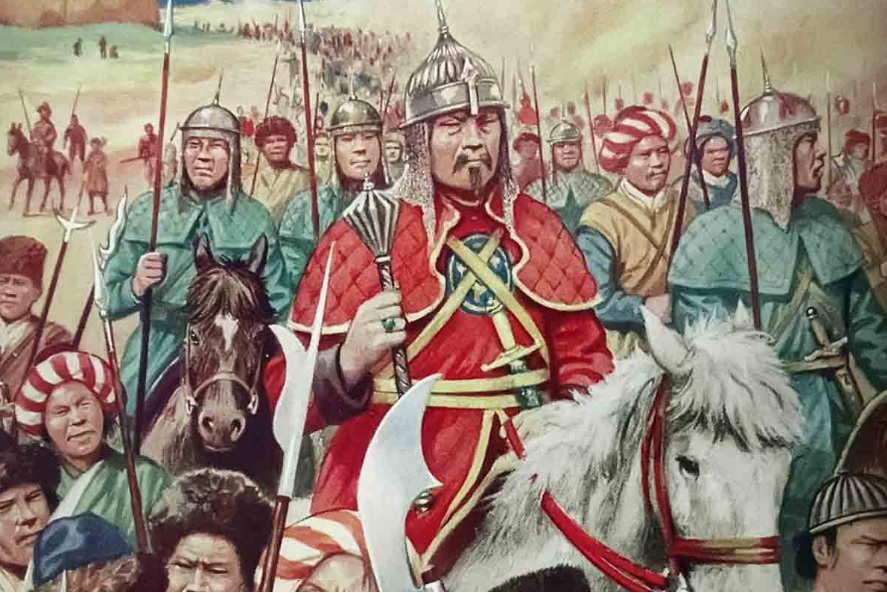
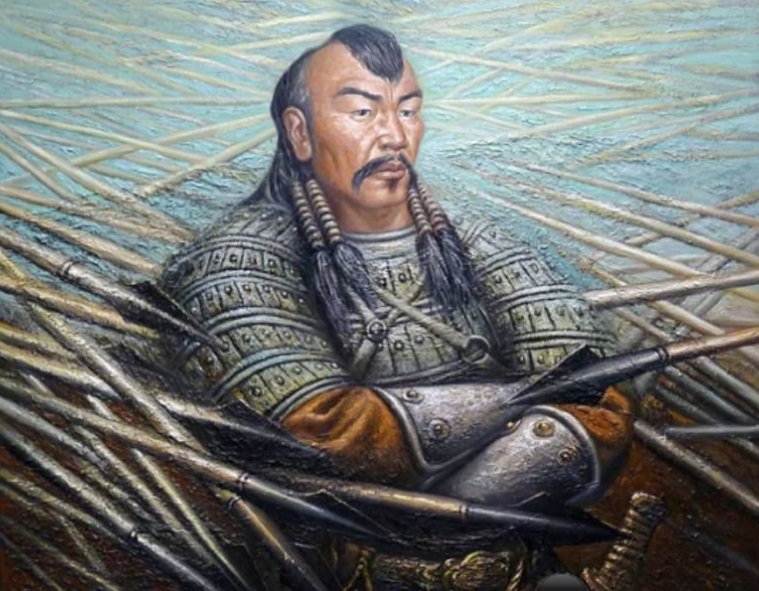
The Golden Horde is also known as the “Ulugh Ulus” (Great State), the “Ulus of Jochi”, or the “Kipchak Khanate”. It is a medieval state that flourished from the mid-13th century until the end of the 14th century, and was one of the most powerful and largest empires of its era. It enjoyed a magnificent culture, beautiful cities, a highly trained army, and a deep-rooted administrative system. It was a powerful empire characterized by tolerance, cultural diversity, and served as the golden cradle for the founding of Kazakhstan.
The Golden Horde possessed the political, cultural, ethnolinguistic, and economic foundations for the statehood of the Kazakh people. Following the collapse of the Golden Horde, the Kazakh, Astrakhan, Siberian, Kazan, Khiva, Bukhara, Kasimov, and Nogai Horde Khanates emerged across the vast Eurasian lands. Meanwhile, the Kazakh Khanate is considered the legitimate successor to the states of the Sakas, Huns, and Oghuz, in addition to the Great Turkic Khaganate and Dasht-i Kipchak (the Kipchak Steppe) and the Golden Horde.
The history of the founding of the Golden Horde dates back to the year 1269, when what is known as the “Talas Kurultai” (Talas Council) was convened on the lands of the current Jambyl region, where the decision to partition the Mongol Empire was made. As a result, the “Ulus of Jochi” (the Golden Horde) gained its full independence. In the Talas River valley, on the borders of Kazakhstan and Kyrgyzstan, the rulers of the Ulus of Jochi, Chagatai, and Ögedei—namely Mengu-Timur, Baraq, and Kaidu—recognized each other’s sovereignty and formed an alliance against the Great Khan Kublai Khan in the event that he refused to recognize their independence.
The Golden Horde was a multi-ethnic and multi-religious Eurasian state, renowned for its policy of tolerance toward various ethnic and religious groups. While non-Jews, heretics, and pagans were being burned across Europe at the hands of the Inquisition, Muslims, Christians, Buddhists, and Jews lived in peace within the vast steppes. The rulers of the Golden Horde contributed, through the construction of major cities, to ensuring the smooth and secure flow of trade. They also fostered appropriate conditions for dialogue between the civilizations of the East and West, the exchange of commodities, knowledge, and ideas, and accelerating the pace of global development.
“The Golden Horde possessed the political, cultural, ethnolinguistic, and economic foundations for the statehood of the Kazakh people. Following the collapse of the Golden Horde, the Kazakh, Astrakhan, Siberian, Kazan, Khiva, Bukhara, Kasimov, and Nogai Horde Khanates emerged across the vast Eurasian lands. Meanwhile, the Kazakh Khanate is considered the legitimate successor to the states of the Sakas, Huns, and Oghuz, in addition to the Great Turkic Khaganate and Dasht-i Kipchak (the Kipchak Steppe) and the Golden Horde.
The history of the founding of the Golden Horde dates back to the year 1269, when what is known as the “Talas Kurultai” (Talas Council) was convened on the lands of the current Jambyl region, where the decision to partition the Mongol Empire was made. As a result, the “Ulus of Jochi” (the Golden Horde) gained its full independence. In the Talas River valley, on the borders of Kazakhstan and Kyrgyzstan, the rulers of the Ulus of Jochi, Chagatai, and Ögedei—namely Mengu-Timur, Baraq, and Kaidu—recognized each other’s sovereignty and formed an alliance against the Great Khan Kublai Khan in the event that he refused to recognize their independence.
The Golden Horde was a multi-ethnic and multi-religious Eurasian state, renowned for its policy of tolerance toward various ethnic and religious groups. While non-Jews, heretics, and pagans were being burned across Europe at the hands of the Inquisition, Muslims, Christians, Buddhists, and Jews lived in peace within the vast steppes. The rulers of the Golden Horde contributed, through the construction of major cities, to ensuring the smooth and secure flow of trade. They also fostered appropriate conditions for dialogue between the civilizations of the East and West, the exchange of commodities, knowledge, and ideas, and accelerating the pace of global development.”
 UAE News 24/7