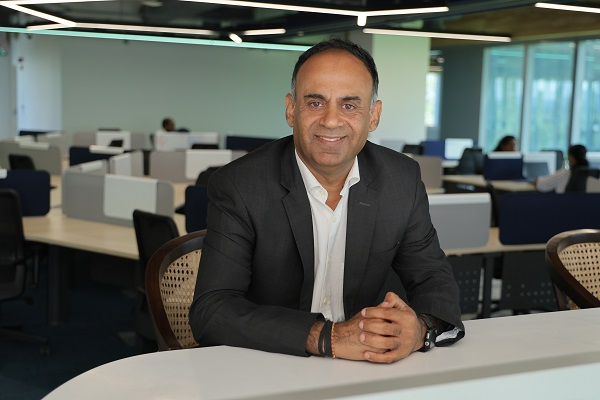
Core42 Raises USD 550 million from HSBC to Scale Global AI Infrastructure
UAE-headquartered AI infrastructure operator strengthens capital base to scale cloud and compute deployments across the United States and Europe
21May, 2026, Abu Dhabi, United Arab Emirates:Core42, a G42 company specializing in sovereign cloud and AI infrastructure, today announced the successful arrangement of two structured trade financefacilities (“the facilities”)amounting toUSD550million with HSBC to accelerate its AI cloud and compute deployments across the United States and Europe. The facilities of USD240 million and USD310 millionwere completedinFebruary 2026 and May 2026 respectively.
Alteryx Puts Business Logic at the Center of Agentic AI, Enabling Enterprises to Operationalize AI at Scale
May 21, 2026 — Alteryx, Inc., a leading AI-ready data and analytics company, today unveiled new product capabilities that advance agentic automation across the enterprise. New enhancements to the Alteryx One platform unify data, business logic, and AI in a single system, enabling organizations to move beyond experimentation and operationalize analytics as intelligent outcomes.
Extending Trusted Workflows into Agent-Driven Systems
Alteryx is introducing new capabilities that make it easier to turn data-to-insight workflows into agent-driven systems, including Agent Studio and the Alteryx One MCP Server. Agent Studio allows teams to package trusted datasets and business logic into reusable agents within Alteryx One, while MCP Server extends those agents into enterprise applications such as Slack and Microsoft Teams, as well as AI agents and LLMs like Claude and OpenAI.
65% of Analysts Say AI Works Best When the Logic is Managed at the Business Level, Alteryx Research Finds
May 21, 2026 — Alteryx, Inc., an AI-ready data and analytics company, today released its “2026 State of Data Analysts in the Age of AI” report, revealing that while AI is becoming central to business decision-making, human oversight remains critical to ensuring AI-generated outcomes are trusted and actionable. The research found that analysts spend nearly four hours per week validating and correcting AI-generated outputs, while poor data quality and governance continue to undermine AI and analytics initiatives. The findings also show that AI works best when the people closest to the business stay involved, with 65% of analysts saying AI and agent-based systems are most productive when the logic is managed at the business level. As organizations accelerate toward more agentic AI systems, the need for trusted data, governed logic and workflows, and human oversight continues to grow.
AppsFlyer Introduces Web Performance Measurement, Advancing the Modern Marketing Cloud Across the Full Customer Journey
The latest addition to AppsFlyer’s Measurement Suite brings mobile-grade attribution and optimization signals to web
May 21, 2026 — AppsFlyer, the Modern Marketing Cloud, today launched Web Performance Measurement, extending the attribution standard that defined mobile performance marketing to web. The release gives marketers one independent source of truth across web and mobile, with the same signal infrastructure that mobile teams have relied on for years.
The result is a performance attribution and activation layer that sits alongside existing analytics tools, eliminating conflicting network reports, closing the signal gap between measurement and optimization, and connecting mobile acquisition to web conversion without requiring additional tools or fragmented workflows.
Capabilities include:
Web Attribution and Optimization Signals: Independent, mobile-grade measurement signals for web campaigns, providing a single, unbiased attribution framework, and automatically routing real-time conversion signals back to every major ad network.
Extended Attribution Coverage for Walled Gardens: Unified reporting across major ad networks under one consistent measurement layer, eliminating gaps in cross-network visibility.
Creative for Web: Act on cross-platform creative intelligence across web and mobile, to inform smarter creative decisions and optimize with precision.
Cost and Revenue Omnichannel measurement: Cross-platform attribution linking mobile acquisition to web conversion and web acquisition to mobile conversions in a single unbroken path, giving teams the complete, unified ROAS picture that no single-platform tool can produce.
The Rail Effect Analysis: Three Ways Digital Infrastructure Will Evolve Alongside UAE Rail
Etihad Rail represents a significant step in the UAE’s national mobility system, with implications for how people live, work, commute and how businesses plan across emirates.
The scale is considerable. Etihad Rail expects annual ridership to reach 36.5 million passengers by 2030, while the broader UAE Railway Programme is backed by AED 50 billion in investment and is projected to generate AED 200 billion in economic and developmental value.
This will affect not only intercity travel, but also the way stations, roads, public transport and last-mile services operate around the network. The next phase will depend on how effectively stations are integrated into the broader urban ecosystem. While the rail network provides the national mobility backbone, the digital layer around it determines how efficiently people and businesses can use it.
Islam Abdul Karim, Regional Head of Yango Group Middle East, outlines three ways digital infrastructure will evolve alongside the UAE’s emerging rail connectivity and what this means for the next phase of urban life.
1. The journey will be measured point-to-point, not station-to-station
Rail solves the intercity journey, but it does not automatically solve the full point-to-point journey. If a passenger saves time between emirates but loses that time finding transport after arrival, the value of the rail journey is reduced.
Daily urban movement already depends on connected, multi-modal journeys rather than a single mode of transport. According to RTA data, public transport, taxis and shared mobility services in Dubai recorded substantial usage in 2025, including 120 million taxi journeys and more than 41 million shared mobility rides. This shows how strongly passengers already rely on different mobility layers to complete their journeys.
Last-mile integration is therefore a core part of the rail experience, not an add-on. Research shows that at least 15 per cent of the decision to use public transport depends on last-mile factors alone. The more predictable and efficient the connection between the station and the final destination, the more useful rail becomes for daily commuters, business travellers, residents and visitors.
For Etihad Rail, where stations are located across a largely car-dependent urban landscape, this challenge is particularly pronounced. Etihad Rail has acknowledged it directly, exploring integration with public transport, taxis and ride-hailing providers to support door-to-door connectivity.
Yango Group’s MoU with Etihad Rail reflects this approach. The agreement focuses on operational alignment at and around stations: designated pick-up and drop-off zones, streamlined vehicle access and peak-hour traffic coordination. A second phase will explore technical integration between the two platforms, enabling passengers to plan and book complete journeys, including rail tickets and ride-hailing, through a single interface.
2. Stations will become connected service hubs, not just transport points
The role of a station is changing. In a traditional transport model, a station is where passengers arrive or depart. In a connected urban system, it becomes a hub where mobility, information and everyday services converge.
According to the UIC Customer Experience report, stations of the future are no longer defined by their physical infrastructure alone, they are evolving into smart service environments. The report identifies digital information and seamless intermodality as two of the core drivers of passenger satisfaction and repeat use of rail.
Passengers will therefore need more than a timetable. They will expect real-time guidance on transport options, station navigation, nearby services, pick-up areas, public transport availability, taxi access, payments and service updates. For visitors, this may also include local recommendations and support in navigating unfamiliar areas.
This requires digital coordination around the station environment. Ride-hailing, public transport, maps, routing engines, traffic data, payments and last-mile options need to work together so that the station becomes part of a seamless urban experience rather than a standalone transport point. This is where ecosystems such as Yango Group’s can support the shift, connecting digital services around passengers’ evolving expectations.
3. Real-time intelligence will help cities adapt to new movement patterns
As rail changes how people move between emirates, it will also change how cities operate around stations. New passenger flows will influence traffic on access roads, demand for taxis and buses, movement between residential and business districts, and the way people plan work, leisure and tourism across the country.
These patterns will not be fixed. A station may see strong commuter demand on weekday mornings, family and leisure traffic on weekends, higher visitor flows during major events, and seasonal peaks linked to tourism. Each scenario creates a different operational challenge: where vehicles should wait, how pick-up areas should be managed, when public transport frequency should increase, and which roads may face pressure. Digital infrastructure helps cities understand and respond to these shifts in real time.
Dubai’s experience already demonstrates the value of this approach: RTA has reported that its Intelligent Traffic Systems helped reduce journey times by 20 per cent, improve incident monitoring by 63 per cent and cut response times by 30 per cent. In 2025 RTA also launched the Transport Data Analysis Laboratory at the Enterprise Command and Control Centre, a dedicated facility formonitoring, collecting and analysing transport data to support decision-making at both strategic and operational levels.
As rail creates new movement patterns around stations, similar real-time coordination will become essential for managing station access, road pressure and onward mobility. Digital ecosystems such as Yango Group’s can support this by connecting ride-hailing access, routing, demand signals and operational coordination around station environments.
For example, if data shows a recurring surge in arrivals at a station after a major event or during peak commuting hours, transport operators can adjust vehicle allocation, manage pick-up zones more efficiently and reduce congestion before it builds. Anonymised mobility data can in this way support better traffic planning, demand forecasting, and infrastructure decisions, improving the efficiency and reliability of the wider urban system.