- Doctors warn that choking remains one of the leading causes of injury and death in children under four
- Simple household items and everyday foods continue to pose serious, often underestimated risks
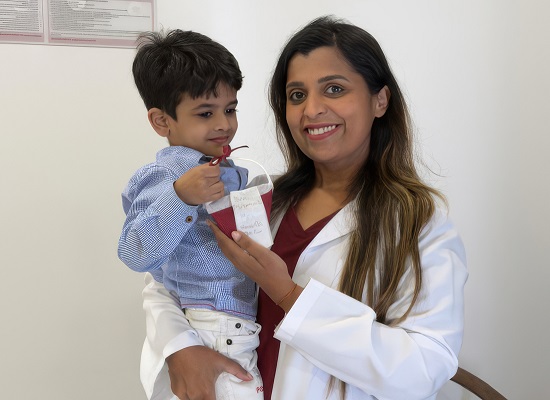
Dubai, UAE – April 16, 2026: A four-year-old boy named Muhammad Shahzain Awan was recently rushed to Medcare Royal Speciality Hospital (MRSH) in Qusais, late at night in a race against time as the boy was struggling with persistent vomiting and choking after swallowing a coin. The child arrived in visible distress, prompting immediate action from the on-call medical team, who identified that the object had become lodged in his upper oesophagus, an area where even slight movement can lead to serious complications.
The coin was removed within minutes using a minimally invasive procedure, and the child was stabilised and discharged shortly after. While the outcome was positive, doctors say the incident underscores a far more widespread and concerning issue: choking remains one of the leading causes of injury and death among young children globally, particularly those under the age of four.
“Foreign body ingestion is something we see more often than people realise, and it can escalate very quickly,” said Dr. Prithvi Priyadarshini, Specialist Gastroenterologist at MRSH and the attending doctor managing the boy’s care. “In young children, the airway and food passage are very small, so even a minor blockage can lead to serious consequences. In this case, timely intervention made all the difference.”
Medical experts note that children in this age group are especially vulnerable due to their small airways and natural tendency to explore objects by putting them in their mouths. Everyday items such as coins, small toys, and even common foods can quickly become dangerous if swallowed or inhaled. Food alone accounts for more than half of choking incidents, with items like grapes, nuts, hard candy, and raw vegetables posing significant risks if not properly prepared.
According to specialists, choking incidents frequently occur during everyday moments, while children are eating, playing, or moving around. In some cases, nearly one in five children between the ages of one and three will swallow a non-food item, with coins being the most common.
The medical team proceeded with an emergency endoscopic procedure, a minimally invasive technique that allows doctors to safely access and remove objects from the digestive tract. The coin was successfully retrieved in just two minutes, and the child remained stable throughout the procedure.
“The procedure was complex and delicate, especially since the patient was a four-year-old child. Children typically have narrower passages and smaller guts, making it challenging to use endoscopy equipment and accessories on them. Such procedures demand a high level of expertise and skill to ensure precision and to complete the process within a short timeframe.,” added Dr. Prithvi Priyadarshini. “Timely intervention is the key factor in preventing complications in such cases, particularly in young patients.”
Following the procedure, the child recovered well with no complications and was able to return to normal activity shortly after observation. The parents expressed their gratitude to the medical team and have indicated their willingness to share their experience to help raise awareness among other families.
Speaking on the incident, the parents said, “When it happened, we were extremely scared. He was vomiting and choking, and we didn’t understand what was wrong at first. It was a very frightening moment for us as parents, and we rushed him to the hospital as quickly as we could.”
“We are incredibly relieved and grateful to Dr. Priyadarshini and the medical team for acting so quickly and taking such good care of our child. The way they handled the situation gave us a lot of confidence, and we’re just thankful that he is safe and doing well now,” they added.
Doctors stress that prevention remains the most effective way to reduce risk. Simple measures such as supervising children during meals, ensuring they are seated upright while eating, cutting food into small pieces, and keeping small objects out of reach can significantly lower the chances of choking incidents.
According to the treating team, Muhammad Shahzain Awan is now doing well and has made a full recovery, with no lasting effects from the incident.
– End –
About Medcare:
Medcare is the premium private healthcare provider under the parent group, Aster DM Healthcare. Operating leading state-of-the-art Hospitals, including Medcare Multi-speciality Hospital in Dubai and Sharjah, Medcare Women & Children Hospital, Medcare Orthopaedics and Spine Hospital, and 20 medical centres in the UAE, Medcare has established a strong presence in the UAE.
Medcare is dedicated to offering premium integrated health services in accordance with the highest quality. From talent to technology to facilities and treatment, Medcare maintains the highest possible standards in healthcare delivery. All Medcare hospitals and medical centres are accredited by the Joint Commission International (JCI), which is considered the gold standard in global healthcare. Apart from this, Medcare facilities have won several certifications.
What sets Medcare apart is its exceptional multi-cultural, multi-lingual team of doctors who have received extensive training from some of the top-notch medical institutes around the world. Using a multidisciplinary approach, the Medcare team provides optimal, evidence-based treatments to patients, with the support of trained nurses, dieticians, rehabilitation therapists and technologists. Living by its simple promise, “We’ll Treat You Well”, Medcare’s team is fully committed to providing high-quality, personalised medical care to every patient. For more information on Medcare, visit http://www.medcare.ae or follow @Medcareae.
 UAE News 24/7