IHC Executes Landmark AED 110 Million DDSC Transaction on ADI Chain, Advancing Institutional Adoption of UAE Digital Infrastructure
• One of the largest single stablecoin transactions executed in the region, with AED 110 million (USD 30 million) transferred on ADI Chain
Demonstrates live institutional-scale capability and validates the scalability, resilience and operational readiness of the DDSC ecosystem
Reinforces the UAE’s position as a global hub for regulated digital asset infrastructure and next-generation financial innovation
Abu Dhabi, UAE – 21 May 2026:IHC, a global investment company focused on building dynamic value networks, today announced the successful execution of an AED 110 million (approximately USD 30 million) transaction using DDSC on ADI Chain, the institutional Layer-2 blockchain developed by ADI Foundation.Following the recent approval received from the Central Bank of the UAE for the launch of DDSC, the transaction represents a defining milestone for the DDSC stablecoin ecosystem, demonstrating operational readiness, scalability, and real-world applicability at institutional volume.
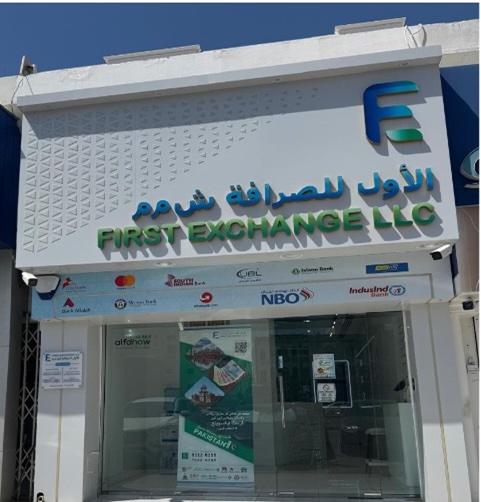
AlfaNow’s services are live across First Exchange’s branches, enhancing access to fast, reliable, and convenient money transfers nationwide
Muscat, Oman, 19th May 2026: AlfaNow, a cross-border payments platform built for how the world moves money today, has announced its official expansion into the Sultanate of Oman through a partnership with First Exchange, approved by the Central Bank of Oman.
Abu Dhabi, United Arab Emirates – May 21, 2026: Nvidia has done it again, beating on the top and bottom line and guiding the current quarter well above Wall Street estimates, yet the share price barely moved. That tepid reaction has become the new normal for the world’s most valuable company, and it tells us exactly how high the bar has been set in the AI trade.
According toJosh Gilbert, Lead Analyst, Middle East at eToro:Revenue of USD$81.6 billion was up 85% on the same quarter last year, with the all-important data centre business pulling in USD$75.2 billion, growth of 92%. For a company of this size to still deliver that level of growth is staggering. Guidance for the July quarter came in at around USD$91 billion, comfortably ahead of the USD$87 billion consensus, while management lifted the quarterly dividend to 25 cents from 1 cent and authorised another USD$80 billion in buybacks. The buyback and dividend hike show that Nvidia wants to keep shareholders on side, even as the eye-watering share price gains of recent years become harder to repeat.
Tariq Al Wahedi: Supporting supply chain continuity now demands a higher level of cross-entity integration as well as more effective links between need and execution capability.
Expanding the platform’s partner ecosystemto include over30 new entitiesacross express delivery companies,transport firms, logistics providers, and entitieslinked to trade and supply chainecosystems.
Rate of request closures or appropriate track directions reaching 100 per cent.
Enabling access to trade finance, funding, and financial risk mitigation support.
Launching ADEED Radar, the operational AI layer for real-time monitoring of trade flow and supply chain indicators.
The Rail Effect Analysis: Three Ways Digital Infrastructure Will Evolve Alongside UAE Rail
Etihad Rail represents a significant step in the UAE’s national mobility system, with implications for how people live, work, commute and how businesses plan across emirates.
The scale is considerable. Etihad Rail expects annual ridership to reach 36.5 million passengers by 2030, while the broader UAE Railway Programme is backed by AED 50 billion in investment and is projected to generate AED 200 billion in economic and developmental value.
This will affect not only intercity travel, but also the way stations, roads, public transport and last-mile services operate around the network. The next phase will depend on how effectively stations are integrated into the broader urban ecosystem. While the rail network provides the national mobility backbone, the digital layer around it determines how efficiently people and businesses can use it.
Islam Abdul Karim, Regional Head of Yango Group Middle East, outlines three ways digital infrastructure will evolve alongside the UAE’s emerging rail connectivity and what this means for the next phase of urban life.
1. The journey will be measured point-to-point, not station-to-station
Rail solves the intercity journey, but it does not automatically solve the full point-to-point journey. If a passenger saves time between emirates but loses that time finding transport after arrival, the value of the rail journey is reduced.
Daily urban movement already depends on connected, multi-modal journeys rather than a single mode of transport. According to RTA data, public transport, taxis and shared mobility services in Dubai recorded substantial usage in 2025, including 120 million taxi journeys and more than 41 million shared mobility rides. This shows how strongly passengers already rely on different mobility layers to complete their journeys.
Last-mile integration is therefore a core part of the rail experience, not an add-on. Research shows that at least 15 per cent of the decision to use public transport depends on last-mile factors alone. The more predictable and efficient the connection between the station and the final destination, the more useful rail becomes for daily commuters, business travellers, residents and visitors.
For Etihad Rail, where stations are located across a largely car-dependent urban landscape, this challenge is particularly pronounced. Etihad Rail has acknowledged it directly, exploring integration with public transport, taxis and ride-hailing providers to support door-to-door connectivity.
Yango Group’s MoU with Etihad Rail reflects this approach. The agreement focuses on operational alignment at and around stations: designated pick-up and drop-off zones, streamlined vehicle access and peak-hour traffic coordination. A second phase will explore technical integration between the two platforms, enabling passengers to plan and book complete journeys, including rail tickets and ride-hailing, through a single interface.
2. Stations will become connected service hubs, not just transport points
The role of a station is changing. In a traditional transport model, a station is where passengers arrive or depart. In a connected urban system, it becomes a hub where mobility, information and everyday services converge.
According to the UIC Customer Experience report, stations of the future are no longer defined by their physical infrastructure alone, they are evolving into smart service environments. The report identifies digital information and seamless intermodality as two of the core drivers of passenger satisfaction and repeat use of rail.
Passengers will therefore need more than a timetable. They will expect real-time guidance on transport options, station navigation, nearby services, pick-up areas, public transport availability, taxi access, payments and service updates. For visitors, this may also include local recommendations and support in navigating unfamiliar areas.
This requires digital coordination around the station environment. Ride-hailing, public transport, maps, routing engines, traffic data, payments and last-mile options need to work together so that the station becomes part of a seamless urban experience rather than a standalone transport point. This is where ecosystems such as Yango Group’s can support the shift, connecting digital services around passengers’ evolving expectations.
3. Real-time intelligence will help cities adapt to new movement patterns
As rail changes how people move between emirates, it will also change how cities operate around stations. New passenger flows will influence traffic on access roads, demand for taxis and buses, movement between residential and business districts, and the way people plan work, leisure and tourism across the country.
These patterns will not be fixed. A station may see strong commuter demand on weekday mornings, family and leisure traffic on weekends, higher visitor flows during major events, and seasonal peaks linked to tourism. Each scenario creates a different operational challenge: where vehicles should wait, how pick-up areas should be managed, when public transport frequency should increase, and which roads may face pressure. Digital infrastructure helps cities understand and respond to these shifts in real time.
Dubai’s experience already demonstrates the value of this approach: RTA has reported that its Intelligent Traffic Systems helped reduce journey times by 20 per cent, improve incident monitoring by 63 per cent and cut response times by 30 per cent. In 2025 RTA also launched the Transport Data Analysis Laboratory at the Enterprise Command and Control Centre, a dedicated facility formonitoring, collecting and analysing transport data to support decision-making at both strategic and operational levels.
As rail creates new movement patterns around stations, similar real-time coordination will become essential for managing station access, road pressure and onward mobility. Digital ecosystems such as Yango Group’s can support this by connecting ride-hailing access, routing, demand signals and operational coordination around station environments.
For example, if data shows a recurring surge in arrivals at a station after a major event or during peak commuting hours, transport operators can adjust vehicle allocation, manage pick-up zones more efficiently and reduce congestion before it builds. Anonymised mobility data can in this way support better traffic planning, demand forecasting, and infrastructure decisions, improving the efficiency and reliability of the wider urban system.
 UAE News 24/7