Innovation transforms global challenge into sustainable solution
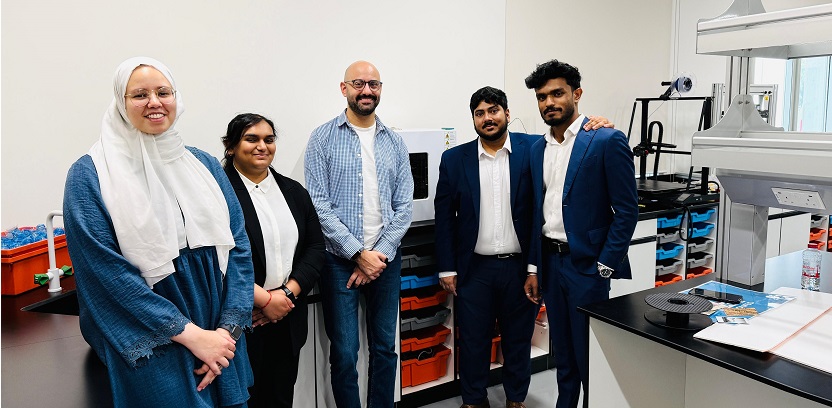
November 04,2025 : Dubai, UAE: As the world struggles with growing plastic waste, a team of mechanical engineering students from Rochester Institute of Technology (RIT) of Dubai has trialled an innovative approach to turning this global challenge into a sustainable solution. As part of their graduation project, Reem Aly, Shriya Vijay, Vishnu Shyju, and Muhammed Sharfuddin, worked under the supervision of Dr. Wael A. Samad, Chair of the Department of Mechanical & Industrial Engineering, to transform discarded water bottles into usable filament for 3D printing.
-Reem Aly, Shriya Vijay, Vishnu Shyju, and Muhammed Sharfuddin worked under the supervision of Dr Wael A. Samad to transform discarded water bottles into usable filament for 3D printing
Tailor-made internship program empowers students to drive digital transformation
October 08,2025: Dubai, UAE: Rochester Institute of Technology (RIT) of Dubai and SIG, a leading global solution provider for aseptic packaging, have successfully concluded a dynamic ten-week internship program, providing students with hands-on experience in cutting-edge technologies and delivering fresh perspectives on industry-based innovation. The initiative, part of SIG’s Digital Transformation Program, saw RIT Dubai students working on real-world projects that harnessed the latest technologies in artificial intelligence (AI) and machine learning (ML), while also equipping them with critical workplace skills.
Simran Bhagchandani with Niall Hoey – Director of Clusters MEA, SIG
Tailor-made for students at RIT Dubai, the internship saw eight seniors from computer science and engineering disciplines apply their classroom learning to deliver smart digital solutions for SIG. Tasked with addressing a range of current business challenges, the students managed the full project lifecycle, from developing solution architecture and training different AI and ML models, to creating user-friendly interfaces and presenting the final product to senior executives.
Research demonstrates positive impact of personalized robotic tutoring in elementary education
July 08, 2025: Dubai, UAE: A study conducted by researchers from Rochester Institute of Technology (RIT) of Dubai has revealed the positive impact of integrating artificial intelligence (AI) and robotics into education at elementary school level. The groundbreaking project used a personalized AI-powered robot to interact with students directly, resulting in an average 8% improvement in academic performance, versus outcomes from human teaching. Led by Dr. Jinane Mounsef, Chair of the university’s Electrical Engineering and Computing Sciences Department, the research highlighted the potential of personalization in robotic tutoring in a real-world educational setting.
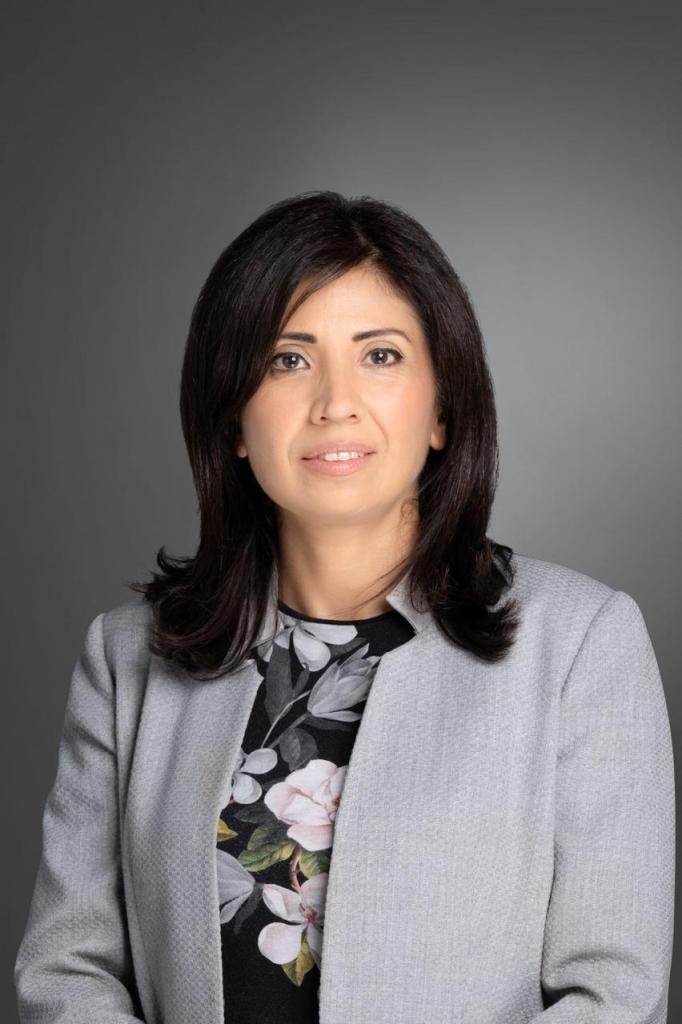
Dr Jinane Mounsef, Chair of RIT Dubai’s Electrical Engineering and Computing Sciences Department
Expert highlights the role of FLP in shaping Arabic language maintenance among UAE expat youth
Assistant Professor of Anthropology Dr. Reem Razem
As more Arab expats in the UAE adopt English as their primary language for communication, a researcher from Rochester Institute of Technology (RIT) of Dubai has been exploring why the language shift from Arabic and how the nation’s mother tongue could be sustained among future generations. Assistant Professor of Anthropology Dr. Reem Razem says that the key to preserving the Arabic language lies in a Family Language Policy (FLP), a bottom-up approach, where small changes in homes and communities can significantly shift societal communication. Parents act as catalysts for informal societal change, while mother tongues create a vital connection between offspring and their parents, linking generations to both their past and future.
Inspired by observing her own children during COVID-19, Dr. Razem embarked on a study to explore the prevalence of English speaking in the case of the second generation among Arab families. A Jordanian expat and a motherscholar, Dr. Razem explained, “I have three bilingual sons, and when we were confined to our homes, I began to wonder why my boys spoke English to each other and sometimes responded in English when I addressed them in Arabic. This developed into an autoethnography research project, where I filmed my boys’ conversations during the lockdown. This revealed that 30-40% of my sons’ speech was in English, whereas conversations between myself and my husband, and when addressing our children was 90-95% Arabic.”
Dr. Razem continued, “I then explored why they use English in conversation at home. Usually, it was to talk about issues related to online learning; in every topic related to English, such as technology-related issues, they would switch to English. The second trend was intriguing because with anything relevant to entertainment, they would switch to English as well. Whether it be music, movies, or a series that they wanted to talk about, they would revert instantly to English. This means they didn’t have the Arabic words to discuss it.”
Building on her autoethnography study, Dr. Razem extended her research into the wider Jordanian expatriate community to explore whether other families witnessed the same phenomenon. She explained, “I’m a part of a social media group for Jordanian mothers in the UAE. I noticed so many posts delving into language shift, parents being unhappy and frustrated with Arabic language loss, and their children not understanding or valuing Arabic. The majority of the posts on the subject were seeking advice on how to instil the love of Arabic, revitalise and preserve the Arabic language in their children’s upbringing, and encourage them to use Arabic at home and in their communities.”
Dr. Razem found that there were a number of issues impacting Arabic literacy, including the shift to English as a medium of instruction in schools and universities, which meant English had become the language of communication and education. She also pointed to small, unconscious acts, such as selecting English over Arabic at an ATM, which were contributing to the decline in usage.
Discussing potential strategies to boost Arabic language use, Dr. Razem concluded, “There is an intersectionality between the role of the parents at home and the role of the immediate community, and then the crucial role of schooling. We must consciously choose to preserve the language through a bottom-up approach. Family is a nucleus of social change, and taking small steps to raise awareness and practice Arabic can help to create a larger-scale movement. Much like the Butterfly Effect, where a seemingly small flap of wings can trigger far-reaching consequences, the decisions parents make daily, such as the language they choose to speak at home, the schools they select, and the day-to-day social and cultural practices they emphasise, carry the potential to reverse language shift and preserve Arabic as a cornerstone of identity and heritage.”
University and homegrown mobility solutions provider join forces to advance education, training and R&D
February 06,2025: Dubai, UAE: Rochester Institute of Technology (RIT) of Dubai and W Motors have established a partnership to promote innovation in the mobility sector, through joint initiatives in education, professional training and research and development. The Memorandum of Understanding (MoU) between the university and the region’s first manufacturer of high-performance luxury vehicles and mobility solutions provider has been established to align with the UAE’s vision to foster collaboration between academia and the private sector.
Dr. Yousef Al Assaf, RIT Dubai President and Mr. Ralf Debbas Founder & CEO of W Motors
Aiming to advance innovation in the automotive and mobility sectors, the partnership sets a framework for academic-industry research and the incubation of new technologies and solutions. RIT Dubai students will have the opportunity to gain unique insights into the industry through internships and experiential learning, and W Motors employees will have access to customized academic and executive development programs at the university. This goal is to contribute to the growth and skills of future leaders and inspire the next generation of innovators.





 UAE News 24/7