During Colorectal Cancer Awareness Month, Memorial Sloan Kettering Cancer Center Showcases New Advances in Care
Global innovation in colorectal cancer care meets growing regional need in the Middle East
DUBAI, RIYADH, DOHA, March 26, 2026. During Colorectal Cancer Awareness Month, Memorial Sloan Kettering Cancer Center (MSK) is spotlighting advances in colorectal cancer care, while emphasizing the importance of screening, early detection, and access to specialized treatment for patients across the Middle East.
Colorectal cancer, which includes cancers of the colon and rectum, remains a major global health challenge. In the Middle East and North Africa region, incidence rates range from approximately 15 to 36 cases per 100,000 people, with colorectal cancer ranking among the most common cancers in Gulf Cooperation Council countries. In several countries across the region, it is a leading cause of cancer related death, and screening uptake remains lower than in Western markets, contributing to later stage diagnoses.
Encouragingly, global incidence and mortality rates have declined in recent years. In 2026, the American Cancer Society reported that colorectal cancer death rates have decreased by 1.5% per year over the past decade for both men and women, citing earlier detection and treatment advances. Many of these innovations have been pioneered or advanced at MSK.
Searching for more cure with less treatment
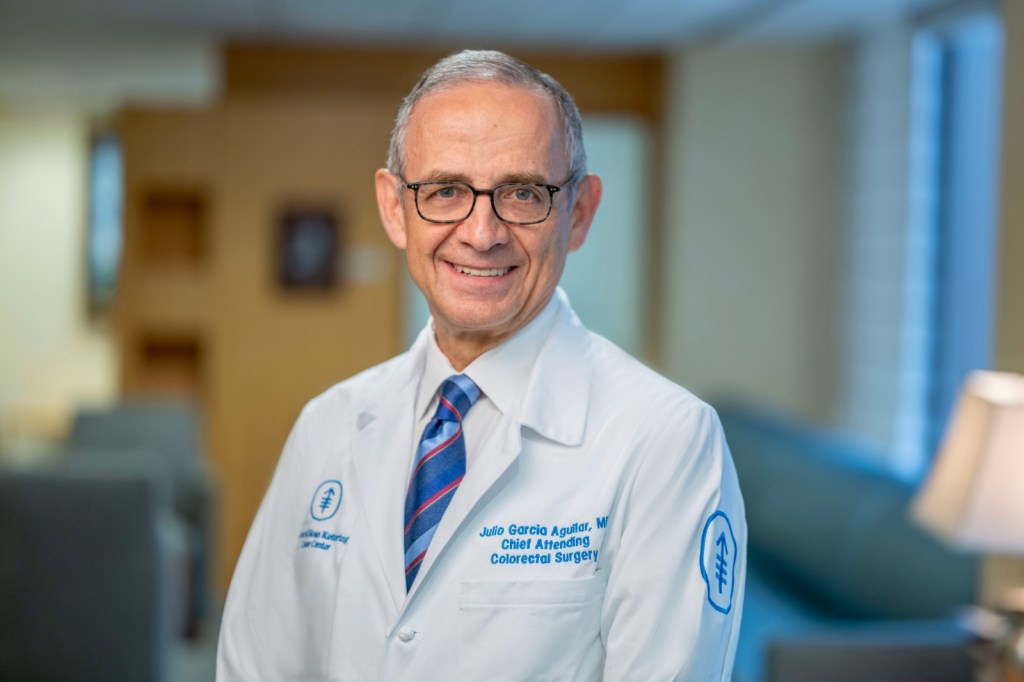
During World Health Expo (WHX) in Dubai, Dr. Julio Garcia Aguilar, Chief of the Colorectal Service at MSK, shared how the treatment approach has shifted toward precision and quality of life.
“The way we approach colorectal cancer has really changed,” he said. “We customize treatment for each patient and constantly search for more cure with less treatment. That may mean less radiation, no surgery, or in some cases immunotherapy alone.”
MSK is a leader in robotic and minimally-invasive colorectal surgery, improving precision while reducing recovery time and complications. The hospital is also internationally recognized for its “watch and wait” approach to rectal cancer, enabling around 50 percent of carefully selected patients to avoid surgery when tumors respond completely to therapy, without compromising survival.
Breakthroughs in immunotherapy are continuing to transform cancer care. In one clinical trial involving patients with a specific type of rectal cancer (MMRd), treatment with immunotherapy alone led to the complete disappearance of tumors in all patients treated so far, without the need for surgery, chemotherapy, or radiation. The hospital has also helped develop a new targeted treatment option for advanced colorectal cancer linked to a particular genetic mutation known as KRAS G12C, offering new hope to patients with this specific cancer profile.
Despite overall progress, colorectal cancer is increasing among adults under 50 globally, however. MSK established the first Center for Young Onset Colorectal and Gastrointestinal Cancer dedicated to understanding and treating early onset disease, an issue that is gaining attention in the Middle East as well.
Supporting patients across the Middle East
MSK’s participation at WHX also underscored its broader oncology expertise and commitment to the region. Professor Dr. Ghassan Abou-Alfa, a gastrointestinal oncologist at MSK, highlighted advances in stomach, liver, and esophageal cancers, noting the importance of genetic testing and personalized strategies in populations where certain cancer rates are elevated.
Alexandra Forauer, Executive Director of International Patient Services, reaffirmed MSK’s dedication to supporting patients from the UAE, Qatar, Saudi Arabia, and across the Middle East. She emphasized coordinated care from diagnosis through follow up, as well as ongoing communication between MSK physicians and doctors in patients’ home countries to ensure continuity of care.
For more information on MSK’s international patient programme, please contact Alexandra at international@mskcc.org.
###
About Memorial Sloan Kettering Cancer Center (MSK)
The people of Memorial Sloan Kettering Cancer Center (MSK) are united by a singular mission: ending cancer for life. Our specialized care teams provide personalized, compassionate expert care to patients of all ages. Informed by basic research done at our Sloan Kettering Institute, scientists across MSK collaborate to conduct innovative translational and clinical research that is driving a revolution in our understanding of cancer as a disease and improving the ability to prevent, diagnose, and treat it. MSK is dedicated to training the next generation of scientists and clinicians, who go on to pursue our mission at MSK and around the globe. One of the world’s most respected comprehensive centers devoted exclusively to cancer, we have been recognized as one of the top two cancer hospitals in the country by U.S. News & World Report for more than 30 years and ranked as the best hospital in the world for oncology according to Newsweek’s World’s Best Specialized Hospitals 2026 list. http://www.mskcc.org.
 UAE News 24/7