Dubai, UAE: For a growing number of students today, university is no longer just about lectures, exams, and placements. It is increasingly becoming a space to experiment, build, and sometimes even launch a business before graduation.
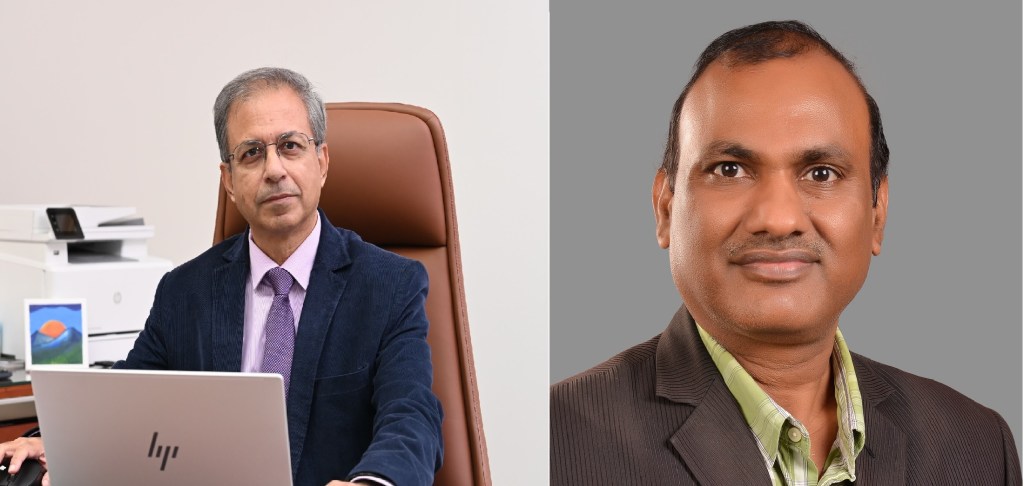
(L–R) Prof. Souri Banerjee, Director, BITS Pilani Dubai Campus_ and Prof. Vilas H. Gaidhane, Faculty In-Charge, CIIED, BITS Pilani Dubai Campus
At BITS Pilani Dubai Campus (BPDC), this shift is quietly taking shape. Over the past few years, students here have been moving beyond academic projects to develop startups that are solving real-world problems—often while still completing their degrees.
The campus’ Centre for Innovation, Incubation and Entrepreneurship (CIIED) has supported around 10 such ventures in the last two to three years. What stands out is not just the number, but the diversity of ideas and the fact that many of these startups are already finding relevance in fast-evolving sectors.
Some of these ventures are working at the intersection of technology and everyday life. Aayu, for instance, is exploring how generative AI can support doctors and patients with more informed healthcare decisions. Krypsm is building a platform aimed at making digital asset management simpler and more secure. In a very different space, OrbitArch is tackling challenges in satellite operations through AI-driven collision avoidance systems.
Others are focusing on more immediate, practical needs. UrbanNest is rethinking how residents access home appliances through shared, app-based systems, while Shipmitra is working on improving logistics efficiency through AI-powered coordination. BitBot Robotics is looking at last-mile delivery in urban environments, a challenge that continues to grow with the rise of e-commerce.
There are also ideas that reflect student life more directly. Aqademia, for example, is designed to help students deal with procrastination and improve focus using behavioural tools. On the business side, Deltor AI is helping organisations streamline operations through automation, while Genme is working on making financial flows in healthcare faster and more accessible. SWIRL, meanwhile, is exploring how online fashion discovery can become more personalised.
What connects these ventures is not just innovation, but the fact that they are being built alongside academic commitments. Some have already taken early steps into the market, securing initial funding, grants, or recognition through regional platforms.
According to Prof. Souri Banerjee, Director, BITS Pilani Dubai Campus, this reflects a broader change in how students are thinking about their future.“Students today are far more willing to explore unconventional paths. They want to build, experiment, and take ownership of ideas early on. Our role as an institution is to support that journey by providing the right environment, mentorship, and flexibility so that they can pursue entrepreneurship alongside their studies,” he says.
Part of that environment is built into the curriculum itself. Through initiatives like the New Venture Creation (NVC) course, students are introduced to the full journey of building a startup—from identifying a problem to developing a minimum viable product. This is complemented by access to incubation support, mentorship from alumni entrepreneurs, and opportunities to present ideas at competitions and industry forums.
Prof. Vilas H Gaidhane, Faculty In-charge, CIIED- BITS Pilani Dubai Campus, who is closely involved with the incubation ecosystem, sees this as a learning process as much as a business one. “It’s not just about launching a company. It’s about helping students understand how ideas evolve, how to test them, and how to navigate uncertainty. Even when a venture doesn’t move forward, the learning stays with them,” he explains.
In many ways, what is happening at BPDC reflects a larger trend across the region. As countries like the UAE continue to invest in innovation and entrepreneurship, students are finding themselves in an ecosystem that encourages experimentation and risk-taking.
For these students, the classroom is no longer the only place where learning happens. Increasingly, it is the starting point for something much larger.
 UAE News 24/7