Abu Dhabi, UAE, 23rd February 2026: At The Majlis of Possible in Abu Dhabi, senior figures from government, technology and business gathered to examine how artificial intelligence and connected systems are reshaping economic and organisational models across the region.
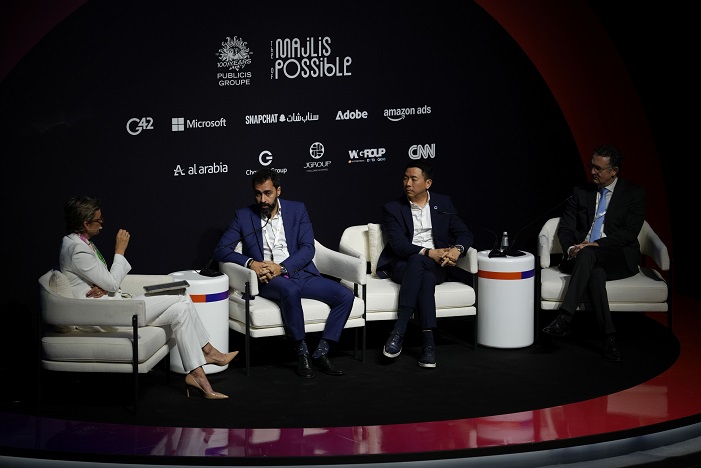
The forum, hosted by Publicis Groupe Middle East on 12 February at Louvre Abu Dhabi, brought together executives from G42, Publicis Sapient, Microsoft, Snapchat, Nestlé, Amazon Ads and Adobe, alongside policymakers and institutional leaders, to discuss how transformation is being implemented in practice.
Rather than focusing on emerging tools, the discussions centred on institutional readiness — how governments and enterprises build the structures, governance frameworks and operating discipline required to deploy AI and data systems at scale.
The event’s headline AI session featured H.E. Mansoor Al Mansoori, Nigel Vaz, Global CEO of Publicis Sapient, and Samer Abu-Ltaif, President of Microsoft Middle East and Africa, in a conversation moderated by Becky Anderson. The panel emphasised that access to advanced technology is now widely available. The differentiating factor, they argued, is execution.
Al Mansoori highlighted the distinction between consumer-facing applications and enterprise systems, noting that while tools can be deployed quickly, meaningful transformation depends on integrated platforms, reliable data foundations and institutional ownership. AI, he said, strengthens existing capabilities where systems are mature, and exposes weaknesses where they are not.
Vaz addressed the gap between strategic intent and operational delivery. Board-level conversations have largely moved beyond defining artificial intelligence to understanding how it can create measurable value. The challenge lies in aligning infrastructure, incentives and organisational culture with that ambition.
Abu-Ltaif focused on trust, governance and sovereignty, areas of increasing importance as digital systems become embedded in public and private sector operations. He stressed that individual training programmes must be accompanied by robust institutional frameworks, including controls, partnerships and regulatory alignment.
The AI discussion formed part of a broader agenda that explored economic resilience, leadership and ecosystem development. Sessions under the “Economy of the Possible” banner examined how organisations are responding to volatility, changing consumer behaviour and evolving regulatory environments. Participants described intelligence infrastructure as a foundation for competitiveness rather than a standalone technology investment.
Other panels addressed the role of culture, sport, luxury and tourism in shaping future growth strategies, reflecting the region’s diversified economic priorities. Speakers emphasised that sustainable development increasingly depends on collaboration between governments, global platforms and private enterprises.
The forum was opened by H.E. Saood Abdulaziz Al Hosani, Undersecretary of the Department of Culture and Tourism, who spoke about Abu Dhabi’s role as a hub for dialogue and innovation. H.E. Nicolas Niemtchinow, France’s Ambassador to the UAE, highlighted the depth of France-UAE cooperation and the importance of cross-border partnerships in driving long-term progress.
A parallel “Studio of the Possible” programme brought students and young professionals into the event, underscoring the importance of talent development alongside technological investment. Organisers described the initiative as part of a broader effort to build future-ready capabilities across sectors.
For Publicis Groupe Middle East, convening The Majlis of Possible during its centenary year reflects a strategic focus on fostering collaboration between policy, technology and business communities. The platform aims to encourage shared learning around implementation challenges rather than isolated innovation.
As the discussions concluded, participants returned to a consistent theme: artificial intelligence is no longer a future aspiration. It is an operational reality. The institutions that will benefit most, speakers agreed, will be those that align strategy, governance and leadership to embed intelligent systems into everyday decision-making.
 UAE News 24/7