KSQF and ECPAT International announce first-ever Arabic translation and localisation of global child protection terminology guidelinesSharjah-led initiative aims to strengthen legal clarity, professional practice, and regional coordination in combating child sexual exploitation and abuse
- Landmark partnership signed between the Khalid Bin Sultan Al Qasimi Humanitarian Foundation and ECPAT International to align child protection efforts across the Arab region
- The initiative addresses a gap in harmonised Arabic terminology on child sexual exploitation and abuse, supporting stronger prevention and response to both online and offline crimes
- Fully funded by KSQF and jointly implemented with ECPAT, the project includes regional validation with experts and survivor-led organisations, ahead of the launch of the official Arabic edition in Q4 2026.
- The guidelines aim to improve access to justice through clearer legal definitions, stronger cross-sector coordination, and survivor-centred professional practice
- The initiative was launched at the House of Wisdom in Sharjah, bringing together regional and international stakeholders to discuss digital-era exploitation and accountability
Sharjah, 16 February 2026
The Khalid Bin Sultan Al Qasimi Humanitarian Foundation (KSQF) and ECPAT International have announced a landmark initiative to translate and culturally localise the second edition of the globally recognised Terminology Guidelines for the Protection of Children from Sexual Exploitation and Abuse into Arabic for the first time. The initiative addresses a crucial need for a harmonised professional terminology across Arabic-speaking communities in Southwest Asia and North Africa (SWANA), supporting stronger legal frameworks, more effective policy development, and more coordinated responses to child sexual exploitation and abuse (CSEA).
By establishing a unified professional reference, the initiative is designed to inform national legislation, judicial interpretation, media reporting, and institutional protocols, helping reduce ambiguity in legal definitions and strengthening coordination across legal, medical, psychosocial, and policy sectors. These measures will be undertaken while fully maintaining the dignity of children.
The announcement was made during a convening hosted by KSQF at the House of Wisdom in Sharjah, bringing together regional stakeholders, international experts, and representatives from the child protection, legal, and development sectors.
Addressing a structural gap in child protection systems
Across many Arabic-speaking contexts, inconsistent or fragmented terminology has historically limited the development of a unified professional language for addressing survivors, managing cases, drafting policies, and communicating with the public on issues related to child protection. Establishing harmonised and culturally validated terminology is therefore an essential step in strengthening prevention, reporting, and accountability mechanisms.
Originally published in 2016, the first edition of the Terminology Guidelines was translated into nine languages, but Arabic was not included. In March 2025, ECPAT International released the second edition, which is now being translated into Arabic under this Sharjah-led initiative.
The need for clear and responsible terminology is underscored by the scale and evolving nature of the issue. UNICEF reported in 2025 that approximately 650 million girls and women worldwide, or one in five, experienced sexual violence during childhood. Meanwhile, between 410 and 530 million boys and men, or around one in seven, were also subjected to sexual violence as children. The WeProtect Global Threat Assessment further reported a 1,325% increase in AI-generated child sexual abuse material in 2025, reflecting a thirteenfold rise in reports within a single year.
The Terminology Guidelines promote precise, non-stigmatising, and survivor-informed language designed to replace outdated or harmful terms. An Interagency Working Group comprising more than 40 agencies contributed to the most recent English revisions, reflecting broad international consensus across the child protection sector.
The Arabic edition will be developed through a similarly collaborative process, engaging regional experts, practitioners, and survivor-led organisations to ensure linguistic accuracy, cultural relevance, and shared ownership. The work goes beyond literal translation to the careful adaptation of terminology that reflects legal nuance, cultural context, and responsible professional practice, ensuring the Arabic edition aligns with global standards while remaining meaningful and practical in regional settings.
Implementation and timeline
Fully funded by KSQF and implemented in partnership with ECPAT International, the project will include translation, technical review, and a participatory validation process. The Arabic edition is scheduled for official launch in the fourth quarter of 2026. To ensure accessibility, a digital version of the Guidelines will be made available free of charge through KSQF, ECPAT, and regional partner platforms, supported by targeted dissemination and advocacy efforts to encourage adoption across professional sectors.
A shared, precise, and survivor-centred language
During the event, Lujan Mourad, Director of the Khalid Bin Sultan Al Qasimi Humanitarian Foundation, addressed participants, emphasising the central role of language in shaping protection systems. She said: “Child protection does not begin at the moment of intervention; it begins with the language we use to name harm, define responsibility, and safeguard the dignity of the child. When the terms used to describe exploitation and abuse are unclear or fragmented, protection systems themselves become weakened. A shared, precise, and survivor-centred language is therefore not a technical detail, but a foundation for effective protection and accountability.”
She added: “By translating and localising globally recognised terminology into Arabic through a rigorous, consultative process, we are addressing a gap that has limited coordination among professionals and institutions across the region. This initiative is designed as a unified tool for the Arab world, supporting clearer and more aligned prevention efforts, responsible professional practice, and language that protects children with dignity, consistency, and care.”
Mr Guillaume Landry, Executive Director of ECPAT International, also addressed attendees and said:”Words matter when we speak about children who are exploited. Words can empower children. They can also victimise them. Words can minimize the harm and trivialize the crime committed, and blame children for what happened. Or they can put the burden of the responsibility on adults who make it possible to harm children. This is why the Terminology Guidelines are important. They help practitioners, the media, policy makers, governments, the private sector and the public to make informed decisions when choosing how they speak about child protection, so that children can feel supported, protected, respected.”
Regional dialogue and collaboration
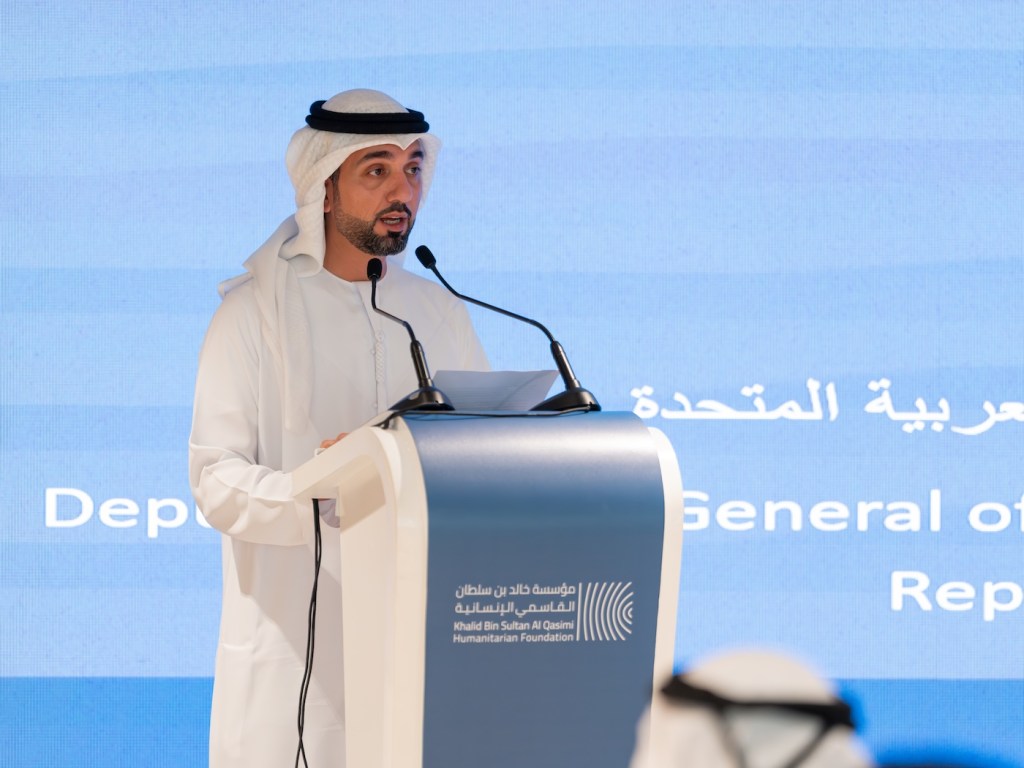
The event featured a keynote address by Lt. Col. Dr. Ahmed Al Zarouni, Deputy Director General of the International Affairs Office and Director of the International Police Representation Department at the Ministry of Interior, who highlighted the strategic importance of unified terminology in strengthening international cooperation, enhancing legal clarity, and supporting coordinated responses to cross-border and digital forms of child exploitation. His remarks underscored the importance of alignment between policy, law enforcement, and social protection systems to ensure effective prevention, accountability, and survivor-centred practice.
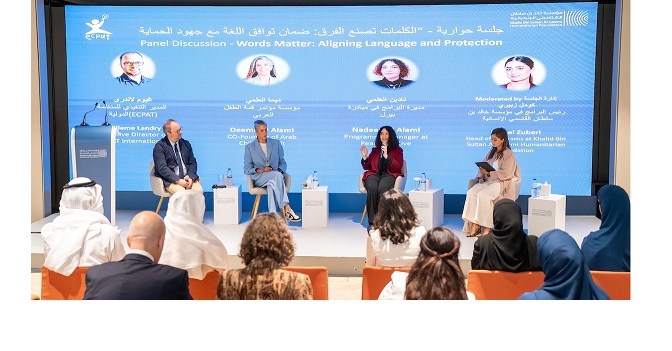
The programme also included a panel discussion titled “Words Matter: Aligning Language and Protection,” moderated by Komel Zuberi, Head of Programmes at KSQF, with participation from Guillaume Landry, Executive Director of ECPAT International; Nadeen Al Alami, Programme Manager at the Pearl Initiative; and Deema Al Alami, Co-Founder of the Arab Child Summit. The discussion examined how terminology influences professional practice, public understanding, and institutional responses to child sexual exploitation and abuse.
Advancing regional cooperation in child protection
ECPAT International brings expertise from a global network spanning more than 120 countries, contributing decades of research, advocacy, and survivor-informed programming. KSQF’s leadership in the initiative reflects its broader mandate to advance safeguarding, advocacy, and capacity building across diverse contexts, guided by the humanitarian legacy of the late Sheikh Khalid bin Sultan Al Qasimi and under the leadership of Her Highness Sheikha Jawaher bint Mohammed Al Qasimi.
The KSQF–ECPAT collaboration reinforces Sharjah’s role as a convening platform for initiatives that strengthen safeguarding frameworks and advance international cooperation in child protection, contributing to more consistent and effective approaches across the Arab region.
–ENDS–
 UAE News 24/7