Collaboration with an international artist transforms elements of the built environment into wearable archives
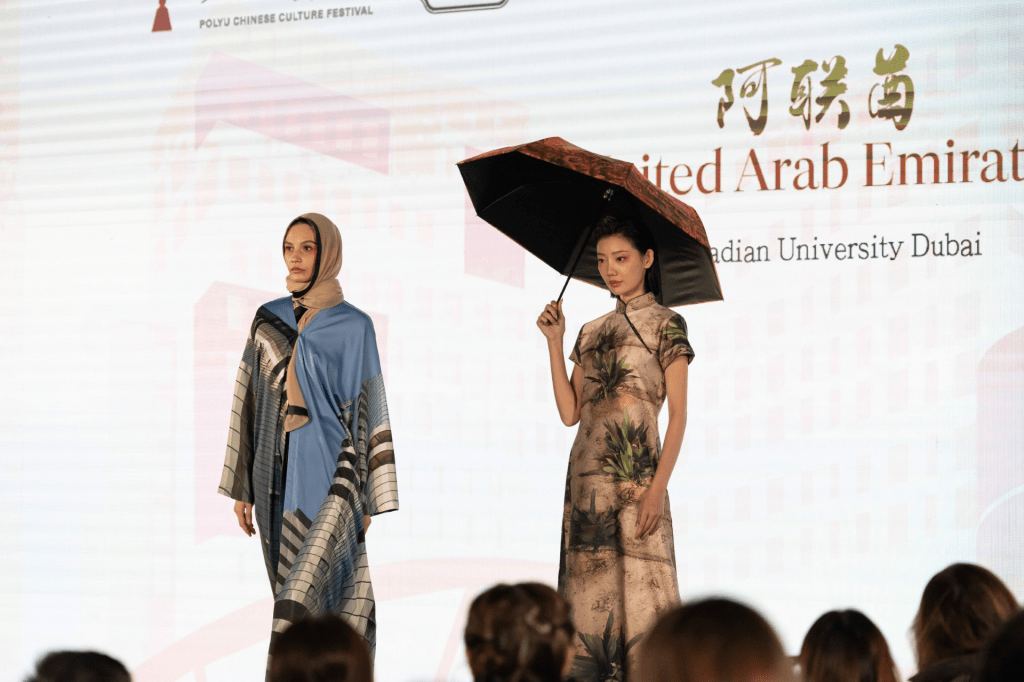
The School of Architecture and Interior Design at Canadian University Dubai (CUD) took centre stage at the Chinese Culture Festival, transporting design innovation from Dubai City Walk to the global catwalk
The School of Architecture and Interior Design at Canadian University Dubai (CUD) has taken centre stage at the Chinese Culture Festival, transporting design innovation from Dubai City Walk to the global catwalk. As a member of the Silk Road Universities Network (SUN) and at the invitation of Hong Kong Polytechnic University, CUD joined participants to explore themes reflecting diverse cultural contexts through fashion design, engaging alongside creative institutions and cultural communities from over 30 countries and regions. In collaboration with international artist Charlie Koolhaas, CUD faculty developed a series of garments that build upon Koolhaas’s ongoing Foto-Couture project. The designs transformed elements of the built environment into wearable archives, with two outfits serving as the creative medium for the Belt & Road Fashion Gala, staged in Hong Kong.
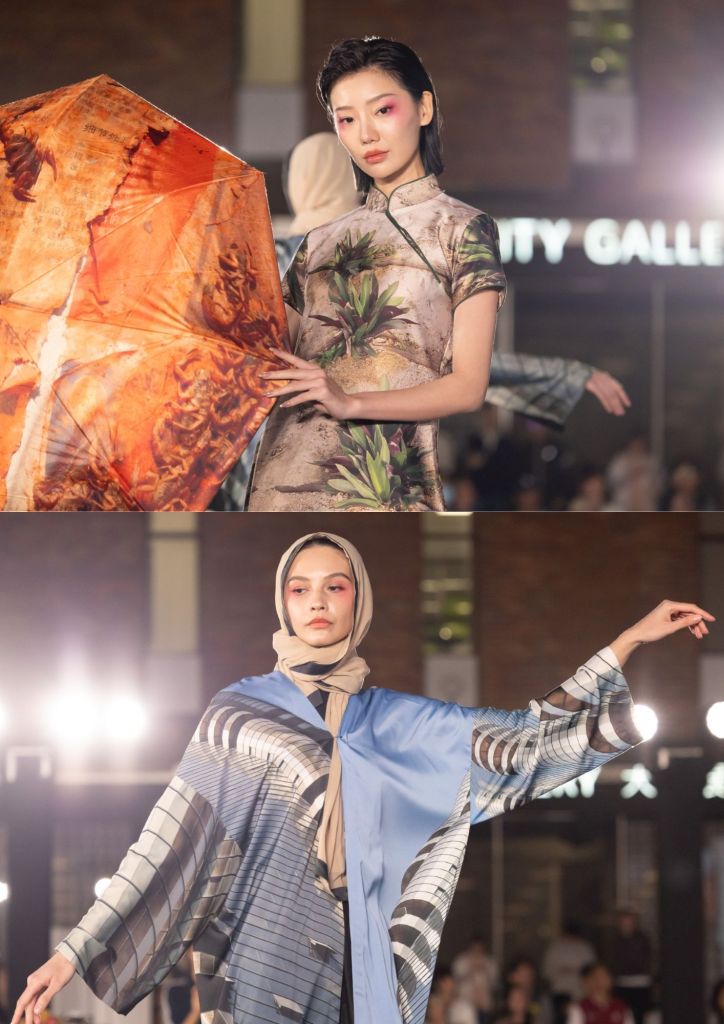
The designs transformed elements of the built environment into wearable archives, with two outfits serving as the creative medium for the Belt & Road Fashion Gala
Bridging memory, heritage, and visual storytelling, the two designs reflect CUD’s ethos as a global hub for innovative design education. The first design, known as Reflected Futures — The Sheikh Zayed Line, signifies a modern abaya —a defining symbol of cultural identity —and pays tribute to the garment’s enduring significance, representing dignity, continuity, and heritage. While its form has adapted aesthetically over generations, it remains a powerful expression of national identity.
The garment, printed with Koolhaas’ photograph of Dubai’s Al Attar Tower on Sheikh Zayed Road, aims to transform architecture into an embodied repository of memory. The tower, an emblem of early 2000s postmodern Dubai, marks a pivotal moment when global modernism began to merge with regional expression. Its mirrored façade and golden cylindrical forms reflect the city’s ambition while softening imported geometries with local sensibility.
The second design, The Irrigated Desert, reflects the Chinese qipao, a garment rooted in refinement and cultural tradition. The outfit is printed with Koolhaas’ photograph of irrigated desert plants in Dubai, rendered as geometric fields of green sustained by drip-feed systems. The image reflects water’s central role in shaping life in the UAE, from ancient falaj irrigation to today’s invisible technological networks. Transferred onto silk satin, the photograph becomes a metaphor for hybridity, linking desert cultivation with the qipao’s history of cultural reinvention. References to Chinese silk traditions and medicinal knowledge merge with Emirati ingenuity in arid survival.
Reflecting on the project’s interdisciplinary nature and academic context, artist Charlie Koolhaas highlighted how the collaboration created space for dialogue across creative disciplines. She said, “This collaboration offered me the opportunity to cross-pollinate my practice in photography, architecture, and fashion within a design-focused academic context, where Dubai’s built environment and wearable forms converge to position heritage as an active driver of innovation.”
Speaking about the broader impact of this initiative, Dean, Massimo Imparato, explained, “The Belt & Road Fashion Gala exemplified the global perspective that defines our School. The dialogue between UAE national and international participants enriched the project with a spectrum of cultural insight and creative intelligence. Engaging in initiatives of this scale is essential to shaping globally minded designers and strengthening our identity as a cross-disciplinary platform where academia and industry converge to drive the future of design innovation.”
Arash Behforooz, Creative Designer in the Marketing & Communications Department, assisted the team in the design process, translating Charlie Koolhaas’ concepts into clear visual directions during selection and project development. “My background in architecture and interior design helped me interpret complex ideas quickly, with AI-enabled workflows. This project shows how design, technology, and cultural storytelling can come together to shape new creative possibilities,” he concluded.
———-
 UAE News 24/7