Renowned Saudi scholar and researcher leads a talk at the 44th Sharjah International Book Fair, highlighting the importance of cultural context in shaping global global perceptions of Arab women
Sharjah, November 10, 2025
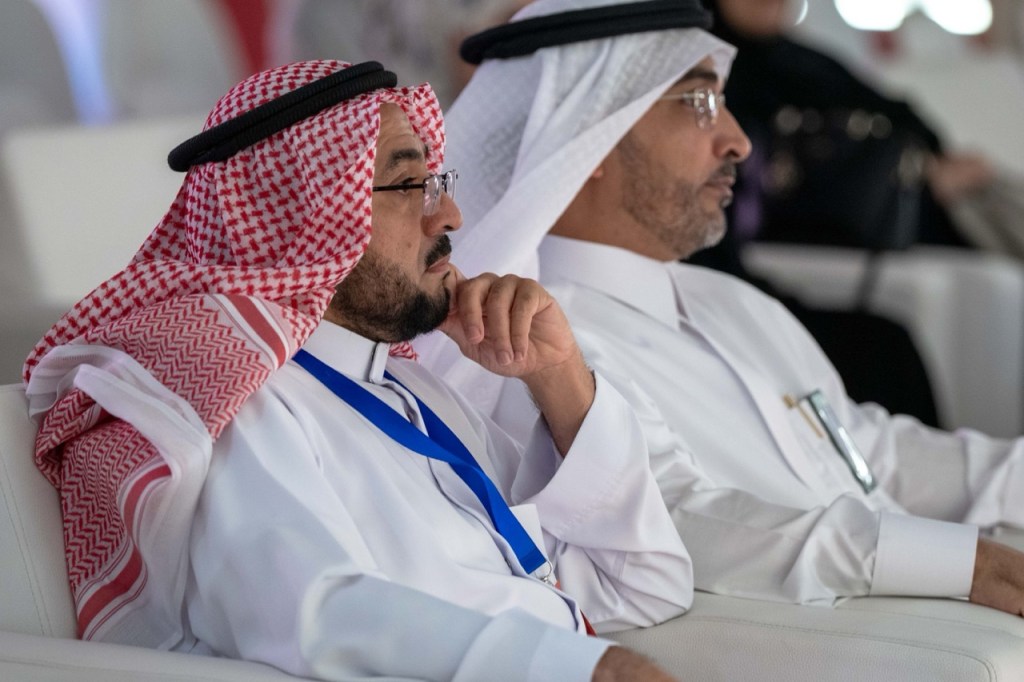
At the 44th Sharjah International Book Fair, academic and researcher in comparative literature Dr. Siham Al-Arishi discussed how literary translation plays a pivotal role in shaping the image of women across different cultures. Speaking at a seminar titled “Middle Eastern Women in Translated Novels”, moderated by Abdulaziz Al-Hammi, Dr. Al-Arishi reflected on how the depiction of Arab women in translated works often oscillates between reality, imagination, and inherited literary conventions.
Dr. Al-Arishi explained that the representation of women in global literature should be understood through the lens of cultural diversity and individuality. “It is not possible to generalise the experiences of women, even within one region or country,” she said, noting that factors such as geography, education, tradition, and social environment shape unique identities. “A Lebanese woman’s experience, for instance, differs from that of a Gulf or Egyptian woman, just as urban and rural environments create varied perspectives.”
She emphasised that literature, as a bridge between societies, has the power to either expand understanding or reinforce simplified perceptions. “The literary image of Arab women has evolved across time and translation,” she noted, “but it must always be examined within its authentic cultural and civilisational context.”
Addressing the evolution of interest in Arabic literature, Dr. Al-Arishi traced its growth since the 1970s, when translations of leading Arab writers such as Naguib Mahfouz, Tayeb Salih, and Ghassan Kanafani brought Arab voices to international audiences. By the 1980s and 1990s, translated works by Arab women writers gained wider attention, enriching the global literary landscape with new narratives, perspectives, and themes.
She noted that translation is not only a linguistic process but also a cultural dialogue that reflects the values and sensibilities of both author and reader. At times, however, she observed that differing interpretive lenses can lead to the re-contextualisation of texts in ways that diverge from their original cultural meaning. Dr. Al-Arishi cited examples from Arabic novels whose visual or editorial presentation was shaped to appeal to international audiences, underscoring the importance of ensuring that translations preserve artistic intent and cultural integrity.
Reflecting on more recent decades, Dr. Al-Arishi observed that global interest in Arabic fiction continues to grow, with works from Iraq, the Gulf, and North Africa reaching new readerships. She highlighted that the diversity of women’s voices in the Arab world today reflects remarkable social, educational, and professional advancements, particularly in the Gulf region, where women hold leading roles across cultural, academic, and governmental sectors.
Dr. Al-Arishi concluded that the ongoing exchange between Arabic and world literature represents an opportunity to foster mutual understanding, deepen respect for cultural specificity, and celebrate the richness and diversity of women’s stories across societies.
-ENDS-
 UAE News 24/7