Bestselling authors Matt Witten and Ragnar Jónasson share the discipline, chaos, and artistry behind adapting fiction for the screen at the 44th Sharjah International Book Fair
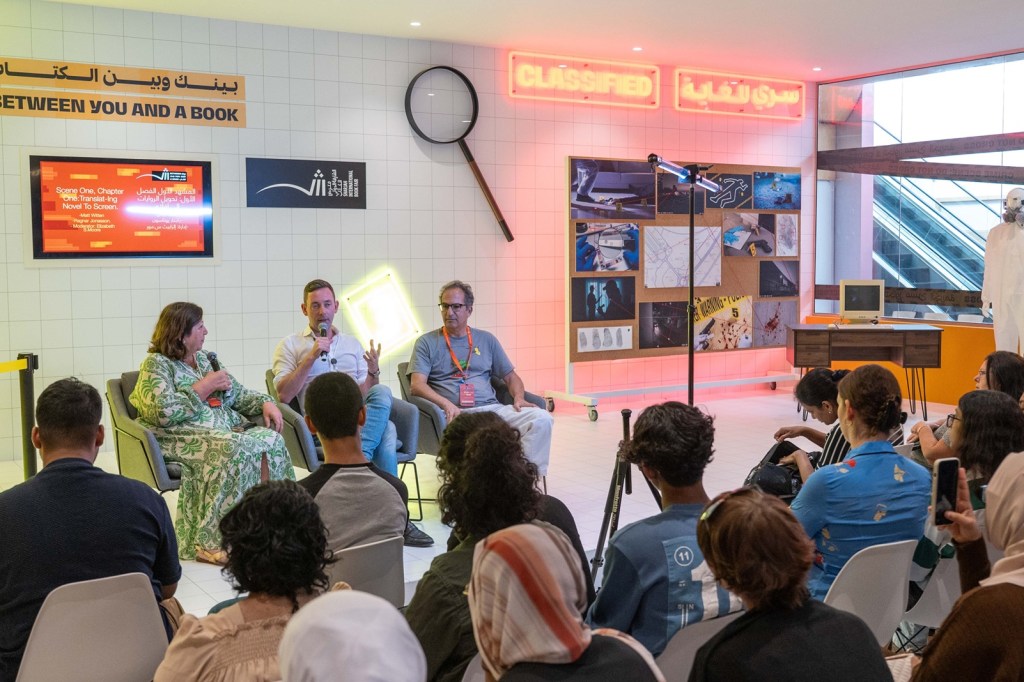
Sharjah, November 9, 2025
Turning novels into screen stories may seem glamorous, but as two acclaimed writers revealed at the 44th Sharjah International Book Fair (SIBF 2025), it is a balancing act between imagination, discipline, and constant reinvention.
At a session titled Scene One, Chapter One: Translating Novels to Screen, Matt Witten, American screenwriter and novelist, and Ragnar Jónasson, Icelandic crime fiction author, joined moderator Elizabeth S. Moore to unpack the creative journey from the written word to the moving image.
When story arcs go off script
Witten, known for his work on the hit television drama House, brought humour and honesty to the discussion as he recalled the chaos of studio decision-making. “We had a serial killer in the first episode,” he said, “By episode two, the killer was gone. By episode three, even the central idea has changed. The show didn’t do well enough and got cancelled — that’s what happens when the story arc isn’t right.”
Behind the anecdotes were lessons in structure and persistence. “You have to know everything about your character — what they eat for breakfast, what music they like, what year they graduated high school,” Witten said. “That’s what separates a screenplay from a novel: a deeper understanding of character through action.”
He urged aspiring writers to “write constantly, watch films in your favourite genre, read the screenplays you admire, and surround yourself with other writers. They’ll make you better.”
Describing the process of writing for American television, he said, “An hour-long episode usually has five acts. You start with a teaser — maybe just two sentences per scene, like a Roman coin covering a corpse’s eyes and someone saying, ‘Oh my God.’ From there, you write an outline, get notes from the studio and network, then lock yourself in for two weeks to finish the script. It’s intense, but that’s how stories get made.”
Where landscape becomes character
For Jónasson, known for his bestselling Darkness series, the process is quieter but equally exacting. “When we were shooting last year, it was so cold that the chill became part of the scene,” he said. “It looked cold, it felt cold — that’s what gives authenticity.”
The Icelandic author, whose novel The Darkness was adapted for television in 2024, views setting as a living element of storytelling. “Iceland is the biggest character in my books,” he said. “It shapes everything — the mood, the pace, even the silences.”
Before a story takes shape, Jónasson begins with clarity. “Before writing The Darkness, I did a one-page study on who and what each character was,” he explained. “That’s something I always share with my agents. Once the story feels right, I move on. You can’t keep perfecting forever — at some point, you have to let go.”
His advice to young writers was direct: “Read as much as you can, but don’t copy ideas — get inspired. And try to write outside your comfort zone. That’s where your audience really lives.”
Where words become pictures
The discussion highlighted the delicate dance between literature and film — two storytelling forms driven by emotion but defined by different economies of detail. “The art of adaptation,” said moderator Elizabeth S. Moore, “is about choosing what to leave behind and what to bring forward without losing the soul of the story.”
The session formed part of SIBF 2025’s rich cultural programme exploring the intersection of books, film, and creativity under the theme Between You and a Book.
– ENDS –
 UAE News 24/7