Category Archives: Education

STEAM at BITS Pilani Dubai Inspires Young Innovators with Hands-On Learning and Creativity

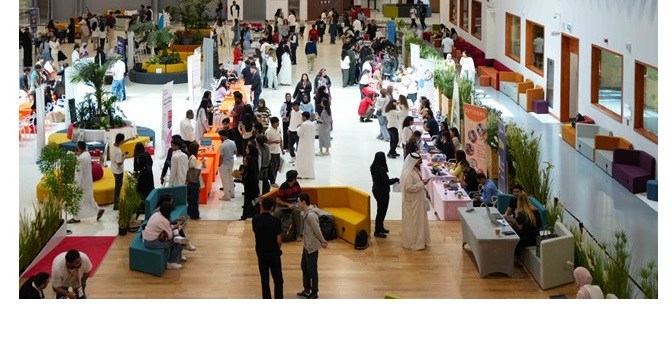
Dubai, 2025 – The STEAM@BITS’25 event at BITS Pilani, Dubai Campus (BPDC), concluded on a high note on Saturday, March 22, leaving young minds inspired and eager to explore the limitless possibilities of Science, Technology, Engineering, Arts, and Mathematics (STEAM). With a dynamic mix of hands-on workshops, interactive sessions, and exciting competitions, the event offered an immersive learning experience, setting a new benchmark for STEAM education in the region.

Continue reading STEAM at BITS Pilani Dubai Inspires Young Innovators with Hands-On Learning and Creativity

Canadian University Dubai researcher joins WHO initiative to reduce death in childbirth

Associate Professor to consult on roadmap to tackle postpartum haemorrhage

March 24,2025 : Dubai, UAE: Canadian University Dubai (CUD) Associate Professor, Dr. Malcolm Price, has joined a team of experts convened by the World Health Organisation (WHO) to tackle the leading global cause of maternal mortality. The project is part-funded by the Gates Foundation and will explore excessive bleeding after childbirth, known clinically as postpartum haemorrhage (PPH), in order to improve prevention and treatment of the life-threatening condition.

Canadian University Dubai Associate Professor, Dr. Malcolm Price, has joined experts at the World Health Organisation (WHO) to tackle the leading global cause of maternal mortality

Continue reading Canadian University Dubai researcher joins WHO initiative to reduce death in childbirth

American University in Dubai Partners with the Abdulla Al Ghurair Foundation to Expand Online & Hybrid Learning

Collaboration aims to enhance accessibility and innovation in professional education.

March 19,2025 , Dubai, UAE—The American University in Dubai (AUD) and the Abdulla Al Ghurair Foundation (AGF) have announced a new partnership to enhance online and hybrid learning, strengthening access to quality education for graduate students and professionals. The initiative focuses on upgrading digital learning infrastructure, expanding faculty development, and enhancing staff resources to support high-quality flexible learning experiences.

Dr. Kyle Long, President, American University in Dubaiا and Dr. Sonia Ben Jaafar, CEO, Abdulla Al Ghurair Foundation

Building on AUD’s existing hybrid learning infrastructure, the collaboration will support the expansion of Hyflex classrooms and the development of two media suites. These advancements will allow graduate-level courses to transition into a hybrid/HyFlex model, providing more accessible and flexible learning opportunities. Initially, the initiative will focus on programs within AUD’s Schools of Business, Engineering and Architecture, Art and Design, with the addition of micro-credential offerings to equip professional learners with in-demand skills.

American University in Dubai and Abdulla Al Ghurair Foundation partner to enhance online and hybrid learning

Continue reading American University in Dubai Partners with the Abdulla Al Ghurair Foundation to Expand Online & Hybrid Learning

Skypex Academy: Revolutionizing Education and Financial Networking


In an era of rapid technological advancements and economic uncertainties, achieving financial freedom is crucial. Skypex is a revolutionary educational platform that empowers individuals with financial knowledge and practical trading skills through a 52 week educational journey. This educational solution is found by the esteemed Udo Carsten Deppisch, a self made millionaire and seasoned entrepreneur with over 35 years of industry master’s. SKYPEX guides you toward the ultimate financial freedom.

Its innovative and user friendly concept distinguishes Skypex in the crowded field of different financial and self educational platforms.  The combination between education and trading allows users to practice trading strategies in a safe, simulated environment,  while they’re building their full confidence and unlocking their high potential, step by step in the educational journey.

Continue reading Skypex Academy: Revolutionizing Education and Financial Networking

RIT Dubai Researcher Asserts Family Language Policy is Key to Preserving Arabic Among Second-Generation Expats in the UAE

Expert highlights the role of FLP in shaping Arabic language maintenance among UAE expat youth

Assistant Professor of Anthropology Dr. Reem Razem

As more Arab expats in the UAE adopt English as their primary language for communication, a researcher from Rochester Institute of Technology (RIT) of Dubai has been exploring why the language shift from Arabic and how the nation’s mother tongue could be sustained among future generations. Assistant Professor of Anthropology Dr. Reem Razem says that the key to preserving the Arabic language lies in a Family Language Policy (FLP), a bottom-up approach, where small changes in homes and communities can significantly shift societal communication. Parents act as catalysts for informal societal change, while mother tongues create a vital connection between offspring and their parents, linking generations to both their past and future.

Inspired by observing her own children during COVID-19, Dr. Razem embarked on a study to explore the prevalence of English speaking in the case of the second generation among Arab families. A Jordanian expat and a motherscholar, Dr. Razem explained, “I have three bilingual sons, and when we were confined to our homes, I began to wonder why my boys spoke English to each other and sometimes responded in English when I addressed them in Arabic. This developed into an autoethnography research project, where I filmed my boys’ conversations during the lockdown. This revealed that 30-40% of my sons’ speech was in English, whereas conversations between myself and my husband, and when addressing our children was 90-95% Arabic.”

Dr. Razem continued, “I then explored why they use English in conversation at home. Usually, it was to talk about issues related to online learning; in every topic related to English, such as technology-related issues, they would switch to English. The second trend was intriguing because with anything relevant to entertainment, they would switch to English as well. Whether it be music, movies, or a series that they wanted to talk about, they would revert instantly to English. This means they didn’t have the Arabic words to discuss it.”

Building on her autoethnography study, Dr. Razem extended her research into the wider Jordanian expatriate community to explore whether other families witnessed the same phenomenon. She explained, “I’m a part of a social media group for Jordanian mothers in the UAE. I noticed so many posts delving into language shift, parents being unhappy and frustrated with Arabic language loss, and their children not understanding or valuing Arabic. The majority of the posts on the subject were seeking advice on how to instil the love of Arabic, revitalise and preserve the Arabic language in their children’s upbringing, and encourage them to use Arabic at home and in their communities.”

Dr. Razem found that there were a number of issues impacting Arabic literacy, including the shift to English as a medium of instruction in schools and universities, which meant English had become the language of communication and education. She also pointed to small, unconscious acts, such as selecting English over Arabic at an ATM, which were contributing to the decline in usage. 

Discussing potential strategies to boost Arabic language use, Dr. Razem concluded, “There is an intersectionality between the role of the parents at home and the role of the immediate community, and then the crucial role of schooling. We must consciously choose to preserve the language through a bottom-up approach. Family is a nucleus of social change, and taking small steps to raise awareness and practice Arabic can help to create a larger-scale movement. Much like the Butterfly Effect, where a seemingly small flap of wings can trigger far-reaching consequences, the decisions parents make daily, such as the language they choose to speak at home, the schools they select, and the day-to-day social and cultural practices they emphasise, carry the potential to reverse language shift and preserve Arabic as a cornerstone of identity and heritage.”

———-