“Sharjah International Education Summit” Concludes the 5th Edition with Strategic Recommendations to Advance the Education Ecosystem
Sharjah – February 16, 2026
Under the patronage and in the presence of His Highness Sheikh Dr. Sultan bin Mohammed Al Qasimi, Supreme Council Member and Ruler of Sharjah, the Sharjah Education Academy and the Sharjah Private Education Authority concluded the fifth edition of the Sharjah International Summit on Improvement in Education, held under the theme “Collaborating for Impact” on February 14 and 15, 2026, at the Academy’s campus in University City.
The summit witnessed broad participation, bringing together more than 10,000 education leaders, policymakers, researchers, teachers, and education experts from within the UAE and abroad to discuss ways to advance the education system in a manner that strengthens the quality and sustainability of learning amid the rapid transformations taking place globally.
This year’s edition was built around three main tracks that complemented one another to form a practical framework for advancing the education system. It resulted in a set of strategic, actionable recommendations at the levels of policy, governance, and school practice, ensuring sustainable impact extending from early childhood through higher education and lifelong learning.
Within the framework of Strengthening Connections: Collaboration Across the Education Ecosystem, participants emphasized the need to shift from short-term reforms and fragmented initiatives toward long-term system coherence, where policy, practice, governance, and capacity-building reinforce one another within a unified vision. They stressed treating education improvement as an ecosystem effort that requires continuous coordination among regulatory bodies, schools, universities, and the private sector, alongside engaging families and communities as active partners in decision-making. Participants also called for aligning policy, financing, workforce development, and quality assurance within an integrated framework that strengthens coherence across education stages and establishes continuous feedback loops to support institutional learning and system adaptation.
Under Innovations in Learning: Transforming Education Through Technology and Practice, sessions recommended embedding ethics, equity, and human oversight in the use of artificial intelligence across education applications, ensuring that technology strengthens decision-making while protecting fairness and accountability. They emphasized designing data systems that improve learning outcomes—not merely ensure compliance—by enabling real-time, evidence-based planning and resource allocation. Participants further called for investing in professional capability to equip leaders and educators with the skills needed to interpret data responsibly, apply digital tools effectively, and use evidence to drive improvement. The discussions also highlighted the importance of authentic assessment practices that reflect critical thinking and self-regulated learning, alongside strengthening a culture of educational research and linking its findings to policymaking.
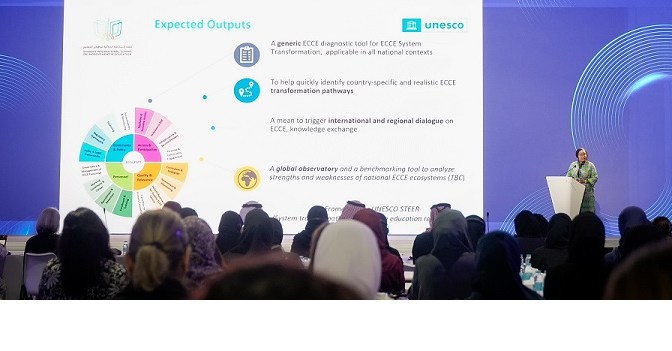
Within Inclusion and Empowerment: Ensuring Access and Opportunity for All Learners, recommendations focused on removing systemic barriers that limit equitable access to learning opportunities and on adopting inclusive policies that guarantee high-quality education for all students. Participants underscored the importance of positioning Early Childhood Care and Education (ECCE) as a strategic investment that forms the foundation of lifelong learning, recognizing that high-quality ECCE improves educational outcomes, economic participation, health, and social wellbeing. They emphasized aligning early childhood policy, financing, workforce development, and quality assurance as a starting point for system-wide transformation. Participants also stressed balancing urgency in reform with long-term institutional capacity-building rooted in trust, sustained professional learning, and durable system capability, strengthening belonging and wellbeing while enabling learners to actively shape their educational experiences.
Sharjah as a Regional Model for Education Development
These recommendations derive their significance from the fact that they extend beyond theoretical outcomes, reflecting practical alignment among policymakers, education leaders, and experts on the priorities of the next phase. They translate the summit theme “Collaborating for Impact” into clear implementation pathways that balance ambition with sustainability and innovation with responsibility, strengthening the education system’s ability to adapt to accelerating change.
Grounded in data-informed decision-making, effective partnerships, and early investment in human development, these outcomes establish a forward-looking roadmap for the next stage of system improvement and reinforce Sharjah’s position as a regional model in advancing education and shaping policies that generate measurable and sustainable impact.
At the conclusion of the summit, the Sharjah Education Academy and the Sharjah Private Education Authority announced that the sixth edition of the Sharjah International Summit on Improvement in Education will take place on 27 and 28 of March, 2027, continuing its mission to institutionalize sustainable improvement and strengthen collaboration across all components of the education ecosystem
.
-Ends-
About Sharjah Education Academy
Sharjah Education Academy (SEA) is a leading academic and professional institution dedicated to advancing the quality of education in the United Arab Emirates and beyond. Founded in 2020 under the vision of His Highness Sheikh Dr. Sultan bin Muhammad Al Qasimi, Member of the Supreme Council and Ruler of Sharjah, SEA aims to empower educators, school leaders, and researchers. SEA delivers innovative, research-informed programmes that support lifelong learning and educational excellence. In 2023, oversight of Sharjah Government Nurseries (SGN) was transferred to the Academy, further strengthening its central role in advancing the quality of early childhood education. This step supports enhanced operational efficiency and the delivery of a unified, child-centred educational experience across the Emirate.
Through strategic partnerships with local and international institutions, the Academy provides professional development opportunities, graduate-level degrees, and cutting-edge research that shape future-ready learning environments. SEA also holds a vital role in policy dialogue, leadership development, and the cultivation of inclusive, learner-centered practices across the educational landscape. Driven by Sharjah’s vision for sustainable development and human capital investment, SEA is committed to transforming education through collaboration, innovation, and global insight.
 UAE News 24/7