Session at the Sharjah International Book Fair spotlights storytelling in the Khaleeji dialect, memoirs of old Abu Dhabi, and children’s tales rooted in Emirati life
Sharjah, November 9, 2025
At the 44th Sharjah International Book Fair (SIBF), storytelling took centre stage during a session titled Preserving Culture and Heritage through Storytelling, where authors highlighted literature’s role as a bridge between generations and a force for social cohesion.
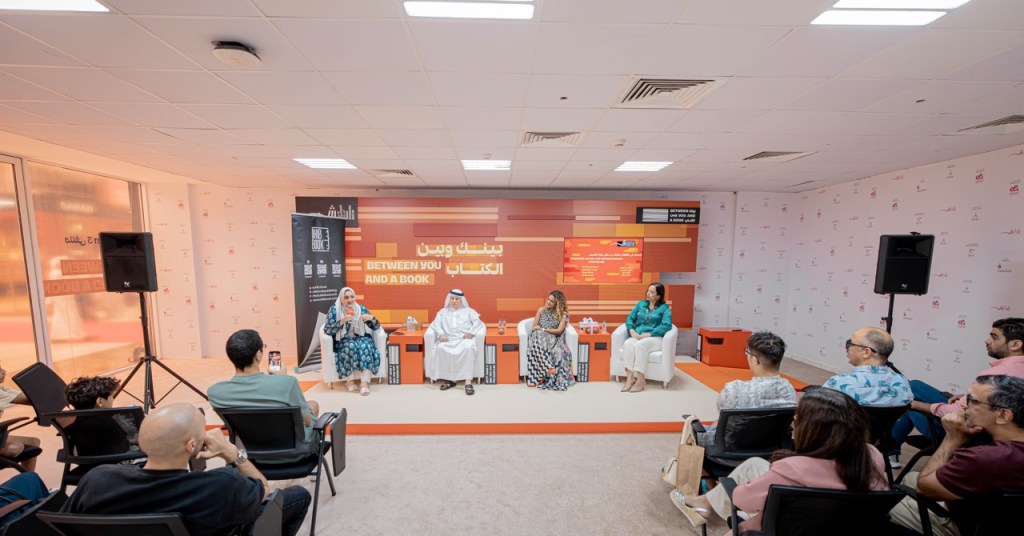
Moderated by Mehnaz Anshah, founder of Uhibbook Publishing, the panel brought together Dr Ahmed Khoori, Bashayer Al Issa, and Shazia Khan, who shared how storytelling sustains the UAE’s cultural identity and fosters belonging.
For Shazia Khan, author of Under the Shade of an Old Ghaf Tree, storytelling connects the past with the present. “As a teacher, I struggled to find books that showcased the UAE’s culture in English that children could actually relate to,” she said. Her book, featuring Emirati foods and animals gathering under the symbolic Ghaf tree, was born out of that gap. “During reading sessions, children always ask, ‘Where are the animals going next?’ Stories have the power to ignite curiosity and connection,” she added. “In today’s fast-paced world, stories allow us to pause, re-centre, and escape.”
Bridge between communities
Bashayer Al Issa, author of Mama Do You Love Me? shared that preserving heritage begins with preserving language. Her children’s book, written in the Khaleeji dialect, offers young readers an authentic reflection of Gulf identity. “When my kids turned four, I realised they were speaking English more than Arabic,” she recalled. “When I read Arabic books, they’d say, ‘Mama, the word for spoon in the book is this, but you say something else!’ That’s when I decided to write a story in our spoken dialect so that they could hear themselves reflected in it.”
Al Issa emphasised that her goal extends beyond Emirati children. “For expat kids, understanding the cultural nuances of where they live gives them a sense of belonging. It helps them know why we pour coffee with the left hand and drink three times, or why the Emirati grandmother wears a burqa. It connects them to the land they call home.”
Meanwhile, Dr Ahmed Khoori’s memoir Where the Sand Never Settles chronicles both his life and the transformation of Abu Dhabi. “In the late 1950s, there were no buildings or roads,” he recalled. “I was a barefoot, mischievous boy running around in the sand. But as Abu Dhabi grew, I grew with it.”
His book offers an intimate view of the UAE’s evolution and heritage. “People often ask me, how can a country formed in 1971 have history? But the land and its people have been here for thousands of years,” he said. “The oldest pearl ever found was from Ghagha Island—over 8,000 years old. We must tell our children that we have always been part of history.”
As the discussion unfolded, the authors shared a common conviction: storytelling shapes empathy, identity, and continuity. “Children are sponges,” said Al Issa. “If we give them the stories and the language, they’ll absorb it.” Khan added, “Educators can easily embed local stories into lessons—it’s about being open and connecting children to where they live.”
Dr Khoori concluded with a timeless reminder: “Without identity, we are lost. We must coach and mentor the next generation so they understand that our culture and heritage are their anchors.”
The session closed with Anshah highlighting the UAE’s inclusive spirit through initiatives such as Storylines, which brought Emirati and expatriate seniors together to share their life stories. “We broke bread, shared memories, and realised that in those exchanges lies the real essence of the UAE—mutual respect, openness, and humanity.”
-ENDS-
 UAE News 24/7